

Storage auctions sit at a strange crossroads between financial desperation and opportunistic excitement, and almost everyone involved walks in with the wrong idea about what they're getting into. Buyers imagine warehouses of hidden treasure. Former tenants assume their belongings are gone forever with no recourse. Both groups are operating on myths built largely by reality television and word of mouth rather than actual experience. The truth is more nuanced, and in many cases, more hopeful than either side expects.
Table of Contents
- How storage auctions actually work
- Myth #1: Storage auctions are guaranteed treasure hunts
- Myth #2: Former tenants lose all rights to their belongings
- Myth #3: All storage auctions are open to the public
- Side-by-side: Top storage auction myths versus reality
- The real risks and rewards of storage auctions: Hard truths from insiders
- Want help navigating storage auctions or recovering items?
- Frequently asked questions
Key Takeaways
| Point | Details |
|---|---|
| Most units hold everyday goods | The majority of auctioned storage units contain household items and not hidden treasures. |
| Former tenants have options | It's possible to recover lost belongings in some cases with the right steps and support. |
| Auction types vary | Not every storage auction is in-person—many are online or have restricted access. |
| Know the real risks | Both buyers and tenants should understand the process to avoid disappointment and protect their interests. |
How storage auctions actually work
The real process of a storage auction is far more regulated and deliberate than most people realize. It doesn't start with a dramatic bidding war. It starts with a missed rent payment, and then another one, and then a formal legal process that gives the tenant multiple chances to catch up before anything goes to auction.
Here's the typical sequence, from missed payment to auction day:
- Missed payment: The tenant falls behind on their storage unit rent, usually by 30 to 60 days.
- Formal notice: The storage facility is legally required to send written notice to the tenant, often by certified mail, informing them of the overdue amount.
- Late fees and lien filing: The facility files a lien against the contents of the unit, which is a legal claim stating the facility has a right to sell the contents to recover owed rent.
- Published notice: Most states require the facility to publish a notice of the pending auction in a local newspaper or online, giving the tenant additional time to respond.
- Auction listing: The unit is listed for auction, either in-person or on an online platform.
- Bidding and sale: Buyers bid on the unit, usually having seen only the contents from the doorway or in photos, and the highest bidder wins.
- Payout and access: The winning bidder pays for the unit and is given access to remove the contents.
What what happens in a storage unit auction reveals is that missed payments lead to units being auctioned through a multi-step process that varies by state. Tenant rights are baked into most state laws, which means the facility cannot simply lock the unit and sell it overnight.
Pro Tip: Before bidding on any unit, look up Texas storage auction laws or the equivalent for your state. Knowing local regulations tells you how much due process was required before that unit hit the auction block, which gives you important context about the contents and the legitimacy of the sale.
The storage company's role is largely administrative: they document the lien, send notices, and manage the auction listing. Their goal is to recover unpaid rent, not to profit from the sale. Most of the proceeds go toward the outstanding balance, with any surplus legally required to be returned to the former tenant.
Myth #1: Storage auctions are guaranteed treasure hunts
Television shows like Storage Wars created a powerful and wildly inaccurate picture of what buyers typically find inside auctioned units. On screen, bidders crack open units and discover antique furniture, rare coins, vintage guitars, and stacks of cash. In reality, the experience is far more ordinary.
Here's what buyers most commonly find:
- Broken or worn furniture
- Outdated electronics that no longer function
- Bags and boxes of clothing, often in poor condition
- Everyday kitchen and bathroom items
- Old paperwork, books, and magazines
- Seasonal decorations and garden tools
- Children's toys and sports equipment
"Most units contain ordinary household goods, not hidden fortunes." This is the reality that many first-time bidders discover only after spending money on a unit they couldn't fully inspect.
As Cut The Lock notes when helping people find lost items after storage auctions, the contents are mostly everyday belongings, not valuables. The economics make sense when you think about it. People who have truly valuable belongings in storage almost always find a way to pay the bill before losing them. The units that go to auction tend to belong to people who were already in financial distress, meaning the contents often reflect the same struggle.
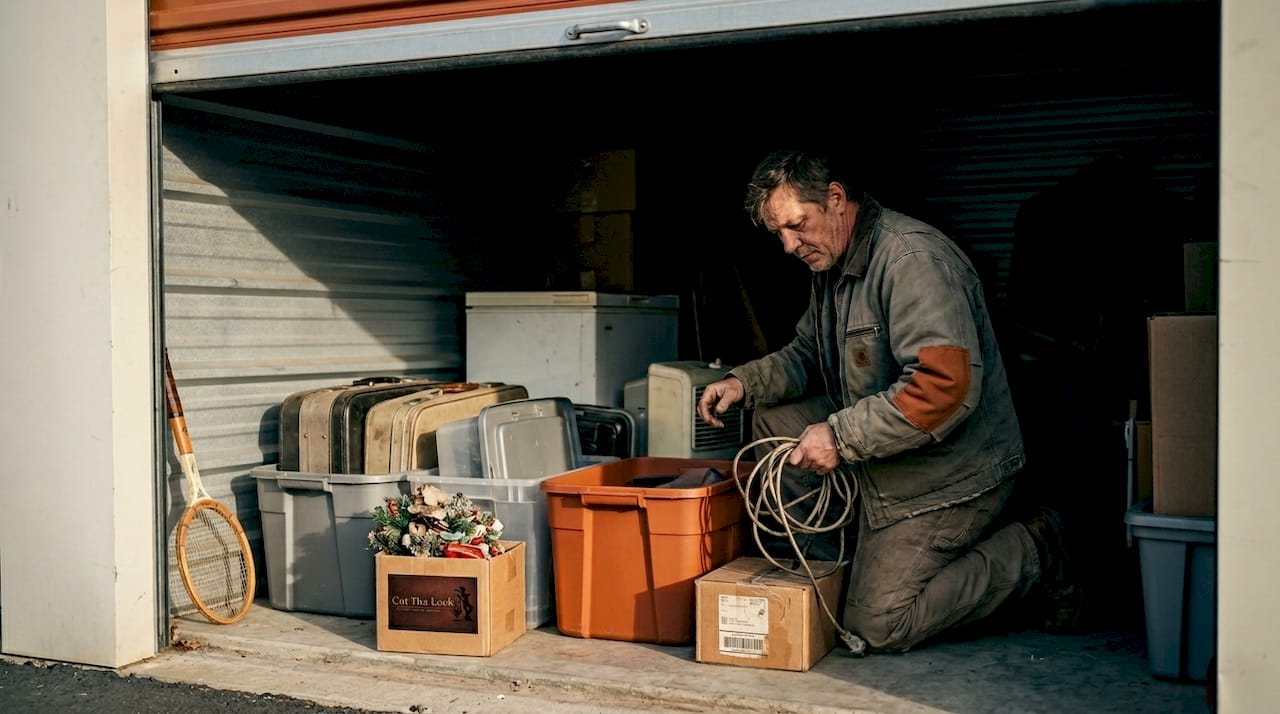
That said, genuine finds do happen. Buyers occasionally discover items of real monetary or sentimental value, including artwork, jewelry, collectibles, and even important documents. But these are the exception, not the rule, and treating them as the expectation sets new bidders up for disappointment and financial loss.
Pro Tip: Before placing your first bid, research what the average storage auction unit sells for and what similar units have contained. Websites and auction forums where experienced bidders share their results give a much more accurate picture than anything you've seen on cable television. Understanding the baseline helps you set a realistic maximum bid so you don't overbid on a unit full of broken lamps.
The guide to recovering items from auctioned units reinforces this point well. Both buyers and former tenants benefit from replacing television fantasy with informed expectations.
Myth #2: Former tenants lose all rights to their belongings
This is the myth that causes the most emotional harm. Former tenants often believe that once a unit goes to auction, every single item inside is gone forever and there is absolutely nothing they can do. That belief is not accurate, and in many cases, it stops people from taking steps that could help them recover something meaningful.
Here's what former tenants should actually do after learning their unit was auctioned:
- Contact the storage facility immediately. Find out the exact date of the auction, who purchased the unit, and whether any items were left behind or not sold.
- Ask about surplus funds. If the auction proceeds exceeded the amount owed, you are legally entitled to receive that difference in most states.
- Document everything. Pull together any records you have: your original lease, payment receipts, communication with the facility, and any notices you received.
- Check for items that weren't taken. Buyers don't always want everything in a unit. Items left behind may still be accessible through the storage facility before disposal.
- Reach out to recovery services. Platforms like Cut The Lock catalog the contents of units they purchase and actively try to reconnect original owners with personal items.
The reality is that some storage facilities offer options for former tenants to recover lost items, and dedicated services have emerged specifically to address this need. If you're wondering how to get your stuff back after an auction, the answer isn't always "you can't."
The most important thing former tenants often overlook is speed. The faster you act after learning about the auction, the better your chances of recovering something. Waiting weeks or months dramatically reduces your options because items get resold, donated, or disposed of quickly once a buyer takes possession.
Pro Tip: Save every piece of communication you have with the storage company, including emails, text messages, certified mail receipts, and any notices posted on your unit door. If there's ever a dispute about whether proper legal notice was given before the auction, this paper trail is your strongest asset. You can also access help for former tenants through specialized services designed specifically for this situation.
Myth #3: All storage auctions are open to the public
Many people assume that if a storage unit goes to auction, anyone can walk in off the street and start bidding. That's increasingly not how it works. The landscape of storage auctions has changed significantly over the past decade, and access rules vary widely depending on where you are and how the auction is conducted.
Here's a breakdown of the main auction types and how access works for each:
| Auction type | Access | Where to find listings | Registration required |
|---|---|---|---|
| In-person public auction | Open to all attendees | Local newspaper, facility notice boards | Sometimes |
| Online auction (public) | Open with account | Platforms like StorageTreasures, Bid13 | Yes |
| Online auction (restricted) | Limited by state or company | Auction platform or facility website | Yes, often with ID |
| Private/closed auction | Invitation or dealer only | Not publicly listed | Varies |
As Cut The Lock's lost items resource notes, some auctions are conducted online, not always in-person, which changes who can participate and how. The shift toward online auctions has made some parts of the process more transparent, since listings include photos and descriptions, but it has also introduced new requirements like verified accounts, deposit payments, and state-specific bidder eligibility rules.
Legal notice requirements still apply regardless of format. Most states require that the public be informed of an upcoming auction through published notices, giving both prospective bidders and former tenants the opportunity to become aware of the sale. If you want to browse current auction listings, knowing the format ahead of time helps you prepare the right credentials and understand what information you'll have access to before bidding.
The key takeaway is that "open to the public" means very different things depending on your state, the storage company's policies, and the platform being used. Always verify the rules before showing up expecting to bid.
Side-by-side: Top storage auction myths versus reality
With individual myths tackled, here's a direct comparison of every major misconception and the factual reality behind it.
| Myth | Reality |
|---|---|
| Buyers always find valuable items | Most units contain ordinary household goods, not rare or high-value finds |
| Former tenants have no recourse | Tenants often have legal rights, may recover items, and may be owed surplus funds |
| The facility profits from the auction | Proceeds go toward unpaid rent; surplus must be returned to the tenant |
| Auctions happen immediately after a missed payment | A structured legal process with required notices takes weeks or months |
| All auctions are open to anyone | Access varies by type, state, and platform; many require registration or have restrictions |
| Buyers can inspect the full unit before bidding | Most buyers see only the open doorway or auction photos, not the full contents |
As detailed in what happens during a storage auction, direct myth versus fact clarification on each of these points shows how far the public perception diverges from the legal and logistical reality. Understanding these gaps is the first step toward making better decisions, whether you're bidding or trying to recover what you've lost.
The real risks and rewards of storage auctions: Hard truths from insiders
Here's something that most guides won't tell you plainly: storage auctions are not a reliable income stream, and they are not a fair system for former tenants either. Both of those things can be true at once.
For buyers, the risk is primarily financial. Without the ability to fully inspect a unit, every bid is a calculated guess. Even experienced bidders who have developed instincts over hundreds of auctions report frequent losses. The units that look promising often disappoint. The units that look unremarkable occasionally surprise. There is no reliable formula, and anyone selling you one is selling you something that doesn't exist.
For former tenants, the risk is emotional in a way that doesn't get discussed enough. Losing a storage unit doesn't just mean losing furniture or electronics. It means losing the box of letters from your grandmother. It means losing the photo albums from your child's first years. It means losing the urn containing a parent's ashes. These are not replaceable items, and the legal process, while designed to be fair, does not account for the weight of what gets lost.
What seasoned bidders and recovery specialists have learned is that empathy is actually a practical tool in this space. Buyers who approach auctions with the understanding that they may be handling someone's most personal possessions tend to make better decisions about what to do with the contents. Returning irreplaceable items when possible, working with recovery services, and being thoughtful about disposal are not just ethical choices. They're the choices that build a reputation in a tight-knit community.
The role of ethical auction operators matters enormously here. Not all storage facilities run their auctions with the same level of transparency or tenant consideration. Some go above and beyond the legal minimums to notify tenants and give them every possible opportunity to reclaim their belongings. Others do the bare minimum. Knowing which kind of operator you're dealing with, whether you're a buyer or a former tenant, changes how you should approach the situation entirely.
If you're a former tenant reading this, the most important piece of insider advice for former tenants is to act fast and ask questions. The system has more flexibility than most people assume, but only if you engage with it rather than walking away believing the situation is hopeless.
Want help navigating storage auctions or recovering items?
Whether you just lost a storage unit or you're thinking about placing your first bid, the myths in this space can lead you in the wrong direction fast. Cut The Lock was built specifically to serve both sides of this equation.

If you're a former tenant, you can find your lost items through Cut The Lock's catalog of auctioned unit contents. Every unit the platform purchases gets fully documented so that original owners have a real chance to recover what matters most. Family photos, personal documents, and sentimental keepsakes are prioritized above everything else. And if you need to understand your options for returning tenants, that resource walks you through exactly what steps to take. For buyers, the platform offers a curated marketplace where you can explore items without the guesswork of a blind auction bid.
Frequently asked questions
Can I recover my belongings after a storage auction?
In some cases, you can recover your belongings or certain items even after a unit is auctioned, especially when you act quickly and use a recovery service. As noted in Cut The Lock's tenant recovery options, some facilities and buyers make reuniting owners with personal items a priority.
Are valuable items often found in storage auctions?
Most storage units contain everyday items, and valuable finds are rare and not guaranteed. Cut The Lock's lost items resource confirms that ordinary household goods make up the vast majority of auctioned unit contents.
Do tenants have any rights after their unit is auctioned?
Tenants often retain rights after an auction, including the right to surplus funds and the ability to claim certain personal items depending on state law. Reviewing your state's lien laws and acting quickly gives you the best chance of exercising those rights.
Are all storage auctions open to everyone?
Some auctions are public, but many are conducted online or have limited access depending on the state and the storage company's policies. Registration, verified identification, and deposit requirements are increasingly common barriers for online auction platforms.