
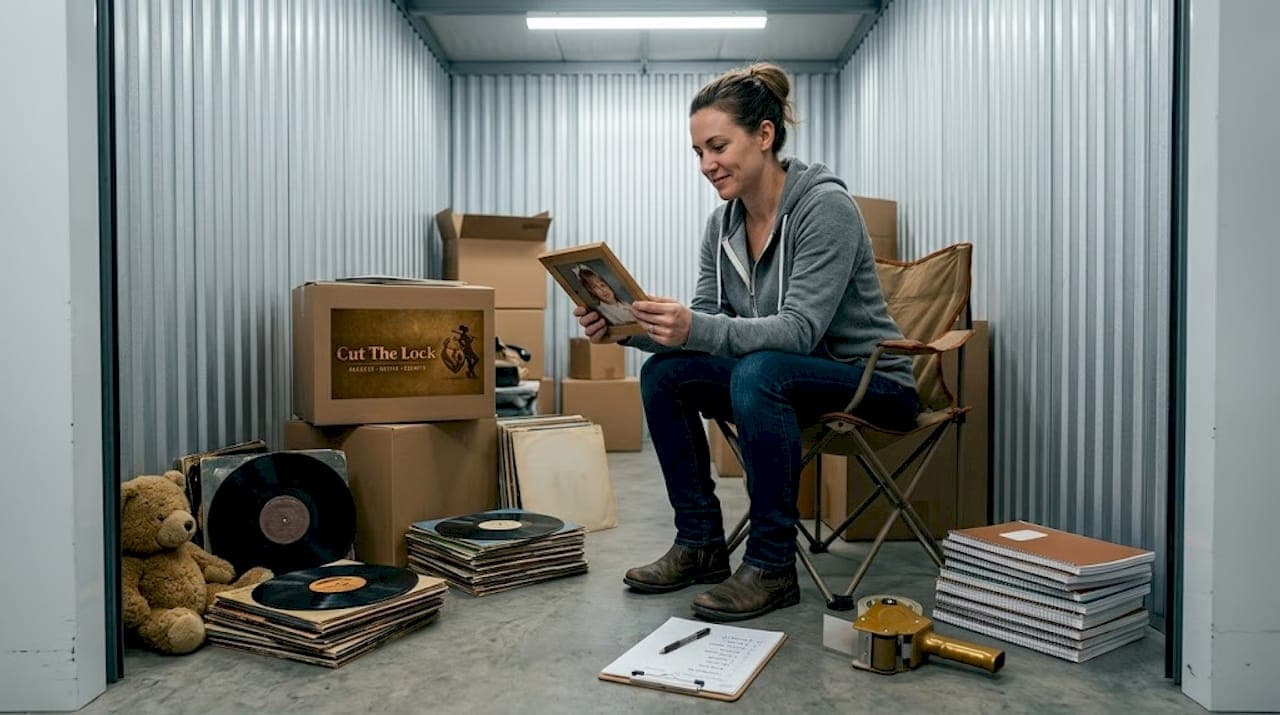
Losing a storage unit to auction is one of the most gut-wrenching experiences a family can face. You picture your grandmother's jewelry, your child's first drawings, or a box of irreplaceable photos sitting in a stranger's hands, and despair sets in fast. But here's what most people don't realize: the moment that unit sells is not necessarily the moment those memories are gone forever. Buyers carry real legal and ethical responsibilities when it comes to personal belongings, and understanding their role gives you a genuine path to getting your most precious items back.
Table of Contents
- What happens to belongings after a storage unit auction?
- Legal and ethical responsibilities of storage unit buyers
- How buyers' actions impact families seeking lost items
- Practical steps for recovering sentimental items from storage auctions
- What most people misunderstand about storage unit buyers and sentimental items
- How to take the next step in recovering your lost items
- Frequently asked questions
Key Takeaways
| Point | Details |
|---|---|
| Buyers must return sentimental items | Storage unit buyers are legally required to return family photos and personal documents to the facility so you can recover them. |
| Timely action is critical | Contact the storage facility promptly to increase your chances of reclaiming lost items. |
| Buyers can be allies | Many buyers cooperate with facilities and services to help families get sentimental treasures back. |
| Use recovery resources | Take advantage of reporting and search services dedicated to reuniting you with lost belongings. |
What happens to belongings after a storage unit auction?
To understand the buyer's role, it helps to start with what actually happens to your belongings once a unit is sold at auction.
When a storage facility sells a unit at auction, it is typically because the renter fell behind on payments and failed to resolve the debt after written notices and a legal waiting period. The facility does not sort through the contents beforehand. Instead, the unit is sold as-is, often with bidders viewing it only from the doorway. Whoever bids highest walks away with everything inside, from furniture and electronics to shoeboxes stuffed with family photos.
Once the buyer takes possession, the contents are generally handled in three ways:
- Items with resale value are kept, cleaned, and sold through flea markets, online listings, or auction platforms.
- Trash, broken goods, and items with no value are disposed of according to facility rules.
- Personal documents, photographs, identification, financial records, and similar sentimental items must be returned to the storage facility, which then attempts to return them to the original owner.
That third category is the most important one for families in crisis. As outlined by legal guidance, buyers are legally required or obligated by facility policy to return personal documents, photographs, passports, financial records, and similar sentimental or personal items to the storage facility for return to the original owner. This is not optional. It is a legal and contractual expectation baked into most auction agreements.
"The sale of a storage unit does not mean the permanent loss of everything inside it. Legal protections exist specifically to give original owners a chance at recovering what matters most."
To get a fuller picture of the full timeline and what options open up after a sale, you can read more about what happens after auction at our resource center. Understanding each phase gives you a clearer starting point for taking action.
| Typical item category | Likely outcome after auction |
|---|---|
| Furniture, electronics, tools | Resold by buyer |
| Clothing, linens, kitchenware | Resold or donated |
| Trash and broken items | Disposed of at buyer's expense |
| Photos, documents, passports | Must be returned to facility |
| Ashes, medical records, legal files | Must be returned to facility |
The table above is a general guide, and outcomes can vary by state and facility. But the core principle is consistent: personal and sentimental items that cannot reasonably be resold without invading someone's private life are protected by policy and, increasingly, by law.
Legal and ethical responsibilities of storage unit buyers
Once you know what happens to your items, it is important to understand exactly what buyers are required and encouraged to do with personal belongings.
Buyers enter into a binding agreement with the storage facility when they purchase a unit. That agreement almost always includes provisions for how personal items must be handled. Legally, buyers must return personal documents, photographs, passports, financial records, and similar personal items to the storage facility so the original owner has a chance to reclaim them. Violating this can result in penalties, loss of bidding privileges, or even legal liability.
Beyond the legal floor, most reputable buyers follow a set of ethical practices that go further. Here is what the process typically looks like when a conscientious buyer discovers personal items:
- Identify personal items during sorting. As the buyer clears out the unit, they separate items that are clearly personal in nature, such as photo albums, letters, identity documents, and keepsakes.
- Package and label them carefully. Responsible buyers keep personal items together and labeled, not mixed into general merchandise bins.
- Return them to the storage facility within the required window. Buyers must fully empty the unit within 24 to 72 hours, including all trash, and often post a refundable cleaning deposit of $50 to $100. Personal items are returned during this same window.
- Document the return. Smart buyers keep a written log of what was returned, to whom, and when. This protects both the buyer and provides a paper trail the original owner can reference.
- Follow up if needed. Some buyers go a step further, actively trying to locate the original owner through contact information found inside the unit.
The distinction between legal obligations and ethical behavior matters here. Legally, buyers must return certain categories of items. Ethically, the best buyers treat every photo album and handwritten letter with the care they would want shown to their own family's belongings.
| Item type | Legal requirement | Ethical best practice |
|---|---|---|
| Passports and ID cards | Must be returned | Return promptly with documentation |
| Family photographs | Must be returned | Keep intact, not separated |
| Financial records | Must be returned | Return in sealed envelope |
| Children's artwork | Policy varies by facility | Return with photos, documents |
| Furniture and electronics | No return requirement | Resell or donate |
| Clothing | No return requirement | Donate when possible |
If you want to know more about how specific state laws shape these obligations, our guide to Texas storage auction laws is a useful starting point for understanding regional variations. And if you're already searching for lost belongings, our finding your belongings after auction page is the place to start.
Pro Tip: If you are a buyer who has discovered personal items, photograph everything before returning it and give the facility a written list. This simple step protects you legally and makes the recovery process far smoother for the original owner.
How buyers' actions impact families seeking lost items
But exactly how do buyers' choices support or hinder your ability to get sentimental belongings back after a sale?
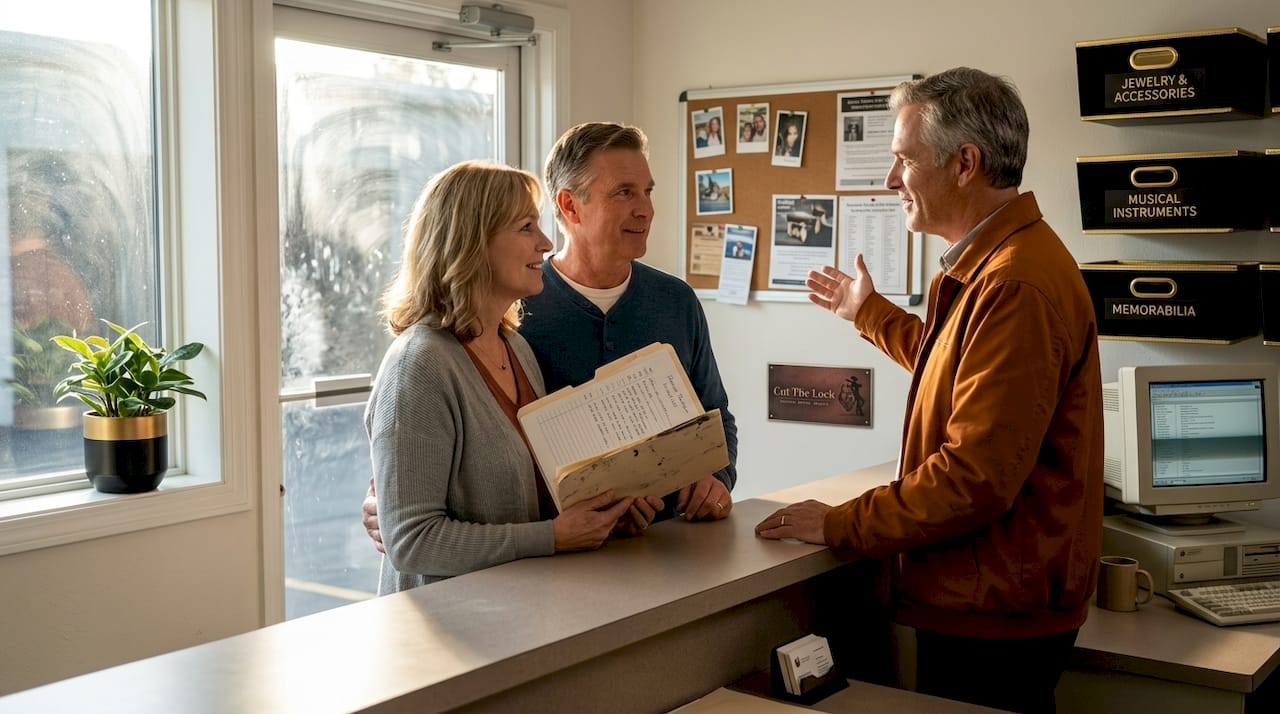
The short answer: enormously. A buyer who takes their obligations seriously can mean the difference between a family recovering a parent's military medals and never seeing them again. A buyer who does not bother separating personal items from general merchandise can wipe out that chance entirely.
The connection between buyers and families runs through the storage facility itself. Here is how that communication channel typically works:
- The buyer returns personal items to the facility manager or front desk.
- The facility logs the returned items and attempts to contact the former renter using the information on file.
- The former renter is notified and given a window to collect their personal belongings.
- If contact cannot be made, the facility may hold the items for a set period before disposal.
This chain only works when each step happens correctly and promptly. Personal items must be returned to the storage facility by buyers, and the facility then becomes your primary point of contact. That means your first call after learning your unit was auctioned should be to the facility, not to a general auction platform.
Timing is critical. Buyers are typically working within a 24 to 72 hour clearout window, meaning the clock starts moving the moment the gavel falls. If you wait a week to reach out to the facility, the returned items may have already been processed or in some cases discarded if the facility could not reach you.
For families who want to explore every recovery option, our guide on ways to find lost items walks through the full landscape of paths available to you. And if you have specific items you want to flag, reporting lost sentimental items gives you a direct way to put your belongings on our radar.
Pro Tip: Call the storage facility the same day you learn your unit was auctioned. Ask specifically whether any personal items were returned by the buyer, and request that your contact information be attached to anything currently being held.
Practical steps for recovering sentimental items from storage auctions
If you are trying to get your family photos or keepsakes back, here is how to boost your odds practically and efficiently.
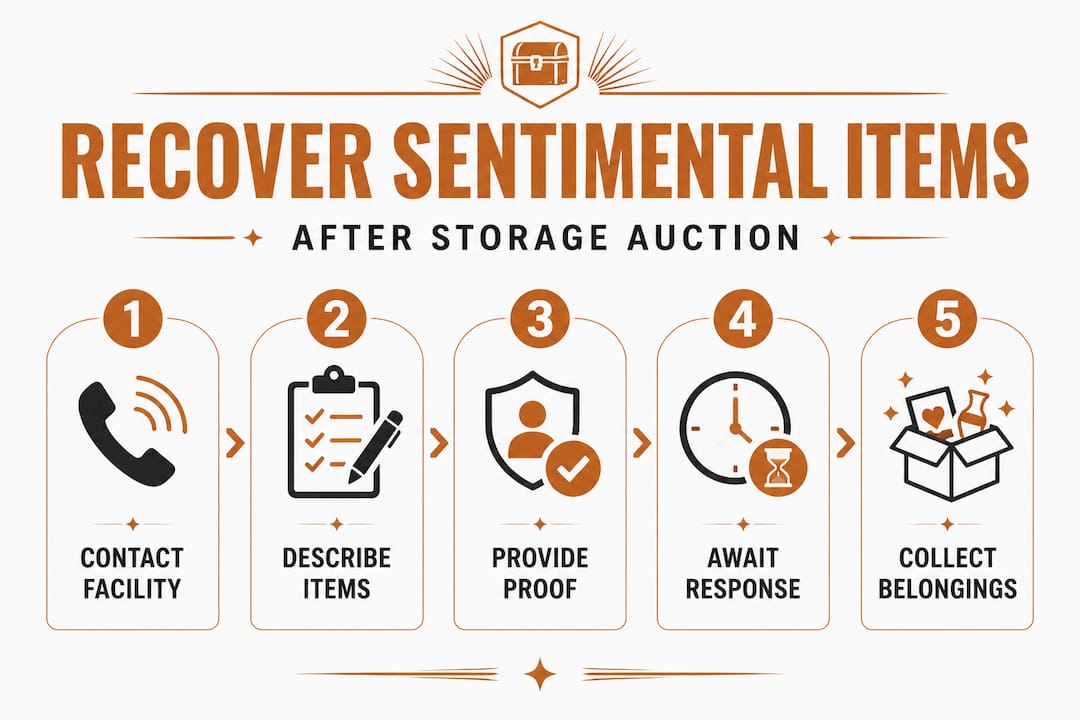
Recovery is rarely passive. The families who succeed are the ones who move quickly, document thoroughly, and stay persistent over time. Here is a step-by-step approach that works:
- Contact the storage facility immediately. Call and ask for the manager. Describe the specific items you are looking for, including colors, sizes, labels, or any identifying features. Ask whether the buyer has already returned any personal items.
- File a formal lost item report. Many facilities have a standard process for this. Put your request in writing so there is a paper trail. If the facility does not have a process, email your request to create a record.
- Use a recovery service. Platforms like Cut The Lock buy storage units, catalog every item inside, and actively work to reunite families with sentimental belongings. Filing a report through getting your stuff back puts your information directly in front of people who can help.
- Monitor listings and platforms. Sometimes personal items end up listed for sale online, especially if a buyer did not realize their significance. Search for specific items by description on resale marketplaces and check platforms that specialize in auctioned goods.
- Follow up consistently. Set a reminder to check back with the facility and any recovery service every week for at least a month. New information can surface as buyers sort through large units over time. Persistence matters far more than most people expect.
- Explore all available recovery options. The lost items recovery options page consolidates multiple pathways in one place so you are not starting from scratch each time.
Pro Tip: Before a crisis ever happens, photograph the contents of your storage unit and keep a written inventory. Even a basic smartphone photo album of your unit's contents can significantly increase your recovery odds if items go missing.
The odds of recovery improve meaningfully when families provide clear, specific descriptions. Saying "a box of old photos" is far less useful than "a green plastic bin labeled 'Family 1990s' containing photo albums with a floral cover." The more detail you give, the more likely someone who encountered your items will recognize them.
What most people misunderstand about storage unit buyers and sentimental items
Popular television has done real damage to how people think about storage unit buyers. The image of a gleeful bidder cackling over someone else's tragedy is great for ratings and terrible for accuracy. The reality is far more nuanced, and understanding it changes how you should approach recovery.
Most buyers are working-class people looking for resalable merchandise. They are not trophy hunters. When they open a unit and find boxes of wedding photos or a child's drawings, a large number of them feel genuine discomfort. Many actively try to return those items, sometimes going well beyond what the law requires, searching for social media profiles, calling numbers found in old mail, or handing items to the facility with a handwritten note explaining where they were found.
We have seen this firsthand. At Cut The Lock, we buy storage units and catalog every item we find. When we encounter sentimental belongings, returning them is not a checkbox. It is the whole point. We have reunited families with photo albums, military memorabilia, handmade quilts, and in one case, a container of a parent's ashes. None of those returns were required by law. They were the right thing to do, and that matters.
The real risk is when families assume the worst and do nothing. If you believe your items are gone and never reach out, you eliminate any chance of recovery. If you assume buyers are the enemy, you miss the opportunity to work with them as allies. The people who get their belongings back are almost always the ones who reached out early, asked clearly, and stayed in contact.
You can browse recovered items on our platform to see what has been cataloged and made available for return. Sometimes the simple act of looking is the breakthrough a family needs.
How to take the next step in recovering your lost items
When you are staring down the loss of irreplaceable memories, you need a clear path forward, not just information. That is exactly what Cut The Lock is built to provide.
We purchase abandoned storage units, document every item we find, and make it possible for original owners to reclaim what matters most before anything else happens to it. Whether you are looking for family photographs, a parent's personal effects, or children's keepsakes, our platform gives you real tools to search, report, and recover. You can recover lost items by browsing our catalog, or you can find your belongings using our search tools built specifically for families in your situation. If you know exactly what you are missing, you can also report a lost item so our team can flag it immediately if it comes through our inventory. You do not have to face this alone.
Frequently asked questions
What items are buyers required to return after a storage auction?
Buyers must return personal documents, photos, passports, financial records, and other sentimental items to the facility so the original owner has a chance to collect them. This is required by law or facility policy in most cases.
How soon can I try to recover sentimental items after my unit is auctioned?
You should contact the storage facility immediately, since buyers typically have 24 to 72 hours to clear out the unit and return required personal items. Acting fast gives you the best chance of recovery.
What happens if a buyer does not return lost sentimental items?
Facility policies and state laws can require buyers to return personal belongings, and failure to do so can result in penalties, legal liability, or being barred from future auctions at that facility.
Can I work directly with a buyer to retrieve personal items?
In some cases direct communication with a buyer is possible, but your most reliable starting point is reporting the loss to the storage facility or a dedicated recovery service like Cut The Lock, which can flag your items across multiple channels at once.