

Reality TV made storage unit auctions look like treasure hunts. Bid a few hundred dollars, crack open a unit, and walk away with vintage guitars or rare coins. The truth? Most units are packed with broken furniture, old clothes, and bags destined for the dump. But that doesn't mean storage unit marketplaces are worthless. Far from it. These platforms have quietly become one of the most interesting intersections of secondhand shopping, community recovery, and yes, the occasional real find. Whether you're a bargain hunter or a former tenant desperate to get something irreplaceable back, understanding how these marketplaces actually work changes everything.
Table of Contents
- Understanding storage unit marketplaces
- What really happens during a storage unit auction
- How lost items are recovered (or lost forever)
- Tips and strategies for success in storage unit marketplaces
- What most guides miss about storage unit marketplaces
- Get help with storage finds and lost items
- Frequently asked questions
Key Takeaways
| Point | Details |
|---|---|
| Auctions differ from TV | Storage unit marketplaces rarely mirror glamorous TV portrayals—most involve routine items and disposal work. |
| Recovery windows are strict | Former tenants must act before the auction starts to reclaim lost personal items legally. |
| Professional tips boost success | Filtering by zip code, unit organization, and avoiding staged units helps auction buyers find better value. |
| Health and legal risks exist | Disposal, biohazards, and prohibited item handling require careful attention and awareness. |
| Marketplace platforms offer support | Sites like Cut The Lock make it easier for individuals to recover belongings or find auction bargains. |
Understanding storage unit marketplaces
A storage unit marketplace is an online platform where storage facilities list units for auction after tenants fall behind on rent. Once a facility follows the required legal steps, including sending notices and waiting out a grace period, the unit's contents are sold to the highest bidder. The original tenant loses access. The buyer gets everything inside.
These platforms exist because storage facilities don't want to be in the business of sorting, selling, or disposing of abandoned goods. Auctioning the unit as a whole solves their problem fast. Buyers compete online, bids go up, the highest offer wins, and the facility gets paid. Simple in theory. A lot messier in practice.
Here's who's involved in a typical auction:
- Storage facilities: They list the unit, provide photos or video walkthroughs, and set the auction window.
- Buyers: Resellers, collectors, and curious individuals who bid from their phones or computers.
- Former tenants: People who may have lost access due to financial hardship and are hoping to recover personal belongings.
- Recovery platforms: Services like Cut The Lock that buy units, catalog items, and work to reunite owners with sentimental goods.
Platform features vary, but most let you filter by location, unit size, and facility rating. StorageTreasures hosts 750,000+ storage auctions each year, with filters that let users narrow searches by city, zip code, and contents. That kind of scale means real competition.
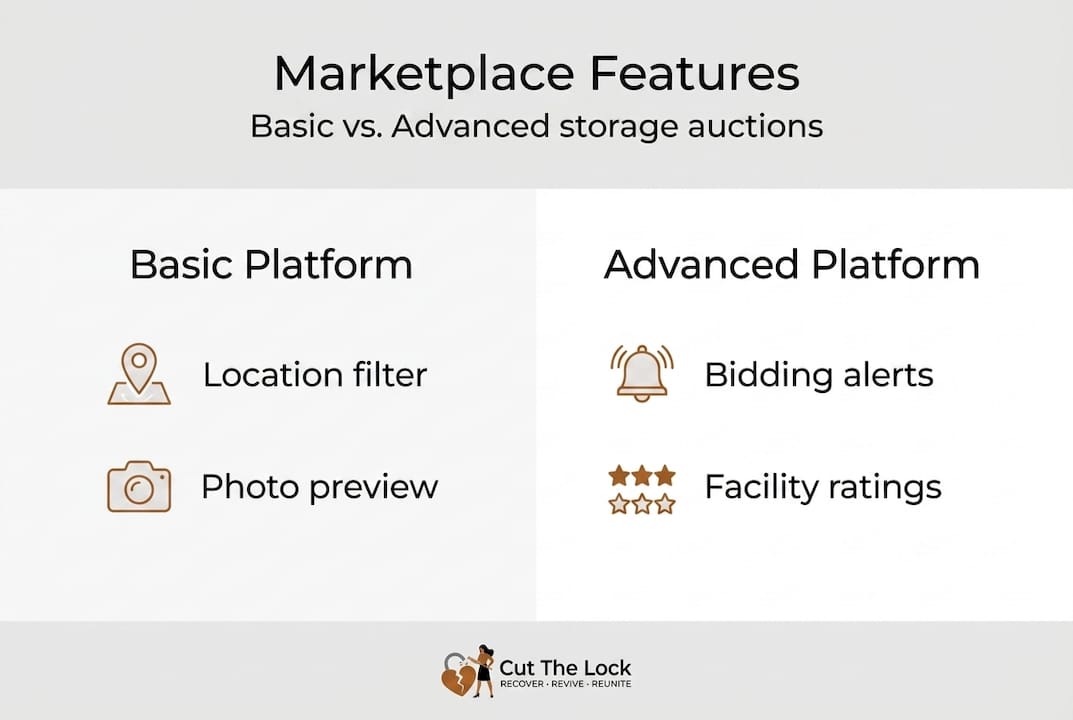
| Feature | Basic platforms | Advanced platforms |
|---|---|---|
| Location filtering | Yes | Yes |
| Photo/video previews | Sometimes | Usually |
| Bid alerts | No | Yes |
| Item recovery tools | No | Some |
| Former tenant support | No | Rare |
Understanding auctioned storage units helps buyers know what they're getting into before placing a single bid.
Pro Tip: Target auctions in high-income zip codes. Units from wealthier neighborhoods statistically contain higher-quality goods. Also look for units with visible organization in the photos: shelving, labeled boxes, and clear pathways signal a former tenant who valued their belongings.
Having set the stage for what these marketplaces are, let's look at how auctions unfold and what's really inside most units.
What really happens during a storage unit auction
Television made storage auctions look dramatic. Bidders crowd around a unit, someone spots a valuable painting behind a dusty couch, and everyone walks away stunned. Real life is quieter and significantly less glamorous.
Here's a step-by-step look at how an actual auction works:
- Facility issues a lien notice: After a tenant misses payments, the facility sends written notices over a legally required period.
- Unit is listed online: Once the deadline passes, the unit appears on a marketplace with photos and a bid window.
- Bidding opens: Registered buyers place bids remotely. Auctions usually last 24 to 72 hours.
- Winner is notified: The highest bidder pays online and receives access to the unit.
- Cleanout begins: The buyer must empty the unit within a set timeframe, usually 24 to 48 hours.
- Prohibited items are handled separately: Firearms, medications, and certain hazardous materials are removed by the facility before the auction begins.
The gap between TV and reality is wide. While shows focus on rare finds, auctions in practice are a volume game, with trash-heavy units, low profit margins, and real health risks during cleanout.
"Most buyers spend more time hauling junk to the dump than reselling finds. The windfall story is the exception, not the rule."
Edge cases add more complexity. Some units smell from mold, food, or worse. Others appear too perfectly staged, with valuable-looking items placed near the front to drive up bids. Experienced buyers know that staged units and hidden compartments are real risks, and they factor that into every bid.
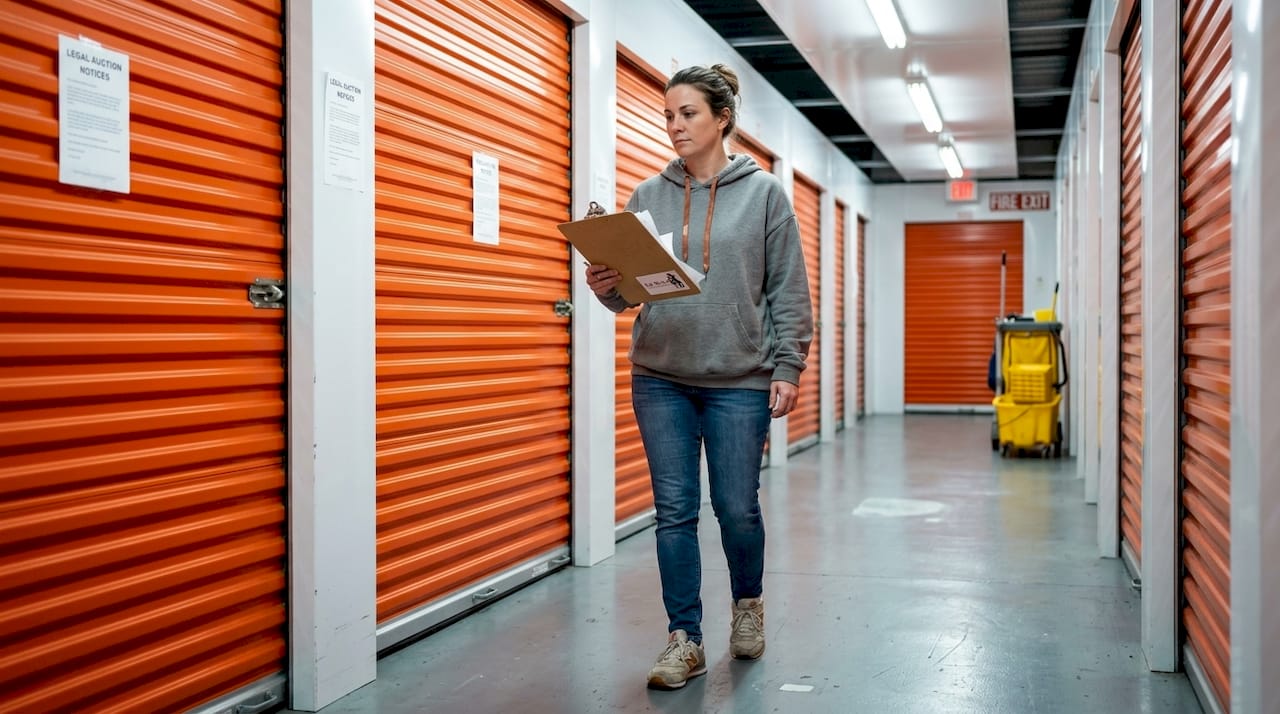
State laws also matter. Texas auction laws, for example, have specific requirements around notice periods, lien timing, and how proceeds are handled. What's legal in one state may not apply the next county over.
For former tenants, the auction process feels entirely different. By the time a unit hits a marketplace listing, the clock has usually run out. Understanding exactly what happens when a storage unit is auctioned can help you act before it's too late.
How lost items are recovered (or lost forever)
For anyone who has ever lost access to a storage unit, this section matters most. The legal window for recovering your belongings is short, and once it closes, your options shrink dramatically.
Here's what the process typically looks like:
- Notice period: After missing payments, tenants receive written notices by mail. This is your legal window to pay what's owed and regain access.
- Lien sale deadline: If rent isn't paid by the deadline, the facility can legally auction the unit's contents.
- Auction start: Once bidding begins, former tenants lose their legal right to reclaim possessions. The buyer owns everything.
- Post-auction recovery: This is where it gets difficult. If the unit has already sold, recovery depends entirely on the buyer's willingness to help.
That last point is where most guides stop talking. But it's also where platforms like Cut The Lock come in. Some buyers, and some companies, actively catalog what they find and offer former tenants a path to recovery for sentimental items.
Pro Tip: If you know your unit has gone to auction, don't wait. Contact the facility immediately to find out who purchased it. Then reach out to find lost items after auction through dedicated recovery services. The sooner you act, the better your odds.
Sentimental items are the hardest cases. Family photos, children's drawings, military medals, urns, handwritten letters. These have zero resale value to a buyer but are irreplaceable to the person who lost them. Knowing where to go for help recovering lost items can make the difference between a painful chapter and a permanent loss.
If you think your unit may have been sold, start with finding lost items resources that are built specifically for this situation. Time genuinely matters here.
Tips and strategies for success in storage unit marketplaces
Whether you're buying or recovering, a few focused strategies make a real difference. The marketplace rewards people who do their homework.
For buyers:
- Filter by zip code first. Professional buyers target high-income zip codes and well-organized units while skipping anything that looks too perfectly staged.
- Look at photo details carefully. Shelving, labeled boxes, clean floors, and visible quality items are all positive signals.
- Avoid units with strong odors noted in descriptions. Biohazard cleanups eat into profits fast.
- Set a hard budget before bidding. Emotional bidding wars rarely end well.
- Factor in disposal costs. If half the unit is trash, dumping fees matter.
For former tenants:
- Act during the notice period. Paying overdue rent, even partially, can pause an auction.
- Document what was in your unit. A written list or photos help you communicate clearly with buyers or recovery platforms.
- Reach out to browse storage listings where your unit's contents might appear after a sale.
- Connect directly with online storage auctions that partner with recovery services.
With 750,000+ auctions listed annually on platforms like StorageTreasures alone, the scale is hard to grasp. That volume means more competition for buyers, but also more chances for former tenants to track down where their belongings ended up.
Pro Tip: Use local filters and check new listings daily. Fresh units often attract fewer bids in the first few hours. For tenants, knowing where your facility lists auctions lets you monitor and respond faster. You can also get your stuff back through services that specialize in post-auction reunification.
What most guides miss about storage unit marketplaces
Most guides talk about profit margins and bidding tactics. Very few talk about the emotional weight of what sits inside these units.
Every unit represents someone's life, often during one of their worst moments. A missed payment isn't always laziness. It's job loss, medical debt, family crisis. The person who packed those boxes believed they'd be back for them.
For buyers, that context matters. Most units require significant trash removal, pose disposal and health challenges, and deliver modest returns at best. But occasionally you find something that clearly belongs to someone. A child's handmade birthday card. A bag of photos. Dog tags. The question of what to do next is one most buyers never prepared for.
Marketplaces are slowly building infrastructure for this. Recovery platforms, item catalogs, and tenant support tools are making it easier to return items after an auction rather than trashing them. That shift matters for communities.
Pro Tip: Before bidding, ask the facility what their policy is on buyer-tenant contact. Some facilities will forward recovery requests. Knowing that before you win a unit could save someone's irreplaceable memories.
Get help with storage finds and lost items
If you've lost access to a storage unit or you're trying to find something that mattered, Cut The Lock was built for exactly this situation. We buy abandoned storage units, catalog every item inside, and work to connect the things that matter most with the people who lost them.
You can recover lost items by submitting a request directly through our platform. If you're not sure where to start, use our tool to find your lost belongings and see if anything from your unit has been identified. For buyers and bargain hunters, browse auction listings to find curated units where every item has been documented. We built this because one person's worst day doesn't have to be permanent.
Frequently asked questions
Can I reclaim my belongings after a storage unit auction starts?
No. Once bidding begins, former tenants lose their rights to reclaim possessions. Your window to act is during the legal notice period before the auction is listed.
Are all storage units full of valuable items?
Most are not. The reality of storage auctions involves heavy trash loads, low profit margins, and health risks, not the treasures TV shows promise.
How do storage unit marketplaces screen auctioned items?
Facilities remove prohibited items before auction, including firearms and prescription medications. Everything else goes to the winning bidder as-is.
What strategies can help me find valuable or sentimental items?
Filter by zip code, look for organized units in photos, and avoid anything that seems staged. Professional buyers prioritize high-income zip codes and skip units that look too perfectly arranged.
Recommended
- What Happens to Your Stuff When a Storage Unit is Auctioned? | Cut The Lock
- Lost Items in Storage Auction? We Can Help | Cut The Lock
- Lost Items Storage Auction — How to Find Your Belongings | Cut The Lock
- 5 Ways to Find Lost Items After a Storage Auction in Texas | Cut The Lock
- Benefits of Renting A Storage Unit When Moving Locally
- Auctim Auctions | Veiling ophalen en thuisbezorgen