

Losing your storage unit to auction can feel like the end of the road, especially when the boxes inside hold family photos, childhood keepsakes, or a parent's belongings. Many people assume that once the padlock is cut and the unit is sold, everything inside is gone forever. That's one of the most persistent and painful myths about the storage auction process. The truth is that reunification, the process of recovering your personal belongings after a missed payment situation, is often still possible. This guide explains exactly how it works, what your legal windows are, and what steps you can take right now.
Table of Contents
- What is storage unit reunification?
- Timeline and steps: From missed payments to auction
- Redemption before auction: The most reliable reunification path
- Recovering sentimental items after the auction
- Special cases: Service members, wrongful auctions, and rare success stories
- The truth about reunification: What most guides don't tell you
- How Cut The Lock helps you recover lost storage items
- Frequently asked questions
Key Takeaways
| Point | Details |
|---|---|
| Redeem before auction | Pay your balance early to reclaim all belongings before they’re sold. |
| Personal items exception | You may recover family photos or documents after auction, but not everything. |
| State laws differ | Notice periods, grace windows, and reunification rules vary by state. |
| Act immediately | Taking action as soon as you get a notice gives you the best chance at recovery. |
What is storage unit reunification?
Reunification in the storage world means getting your belongings back after you've fallen behind on rent. It can happen before a sale, during the lien process, or in some cases even after the unit has been auctioned. The concept is broader than most people realize.
Before auction, reunification is straightforward: you pay what you owe, and you get your stuff back. After auction, it gets more complicated. Storage unit reunification refers specifically to the process by which original owners can reclaim belongings from a delinquent unit before or during the lien sale, or potentially recover specific personal and sentimental items after auction via facility or buyer policies.
"Reunification isn't a guaranteed right after auction. It's a combination of legal protections, facility goodwill, and buyer ethics working together."
Here's an important distinction: reunification rarely means recovering everything. Bulk items like furniture, electronics, and clothing are almost always resold or discarded. What reunification realistically targets are the irreplaceable things: family photos, legal documents, medical records, children's artwork, urns, and personal letters.
The main paths to reunification include:
- Redemption before auction: Paying all outstanding fees to stop the lien sale entirely
- Facility-assisted recovery: Requesting that the facility hold or return personal documents after the sale
- Buyer cooperation: Reaching out directly to the auction winner to recover sentimental items
- Formal reporting: Using a platform like finding lost auction items to log your belongings and connect with buyers
Understanding which path applies to your situation depends entirely on timing. The earlier you act, the more options you have.
Timeline and steps: From missed payments to auction
With reunification defined, it's crucial to see how much time you actually have to take action. The process from missed payment to auction follows a legal sequence governed by state lien laws, and every stage matters.
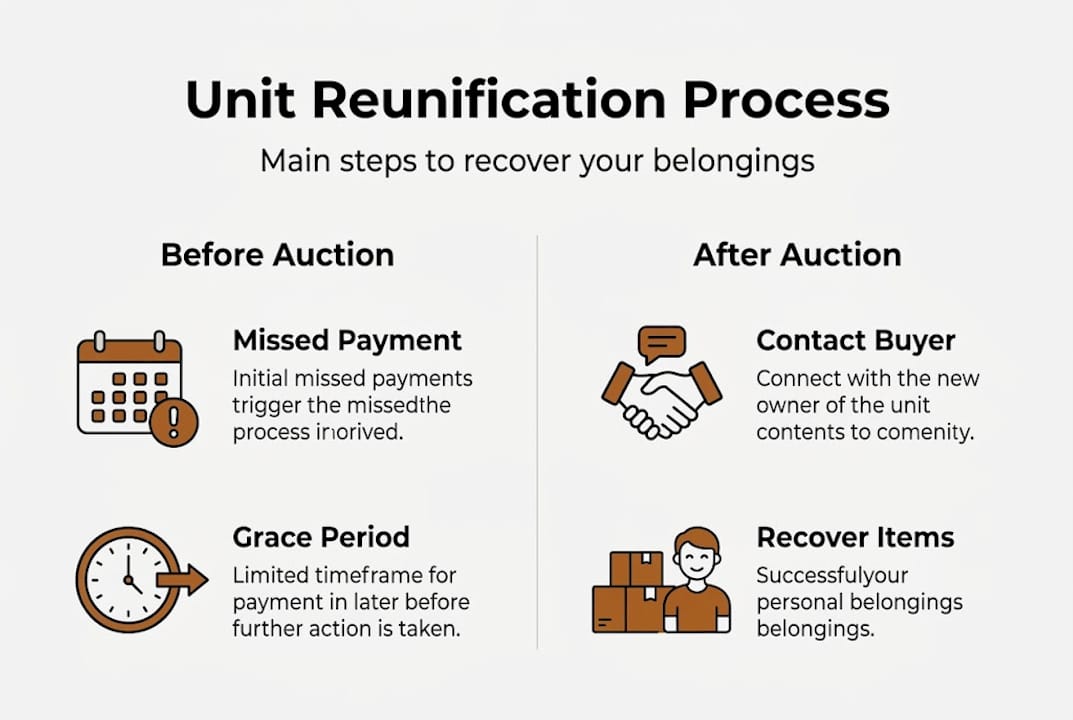
Facilities follow a strict legal process: a default notice is sent by certified mail or email, access is denied, the unit is publicly advertised, and then auctioned if the balance remains unpaid. This state lien process is not optional for facilities. They must follow it to legally sell your unit.
Here's a general timeline of what to expect:
| Stage | Typical timeframe |
|---|---|
| Missed first payment | Day 1 |
| Grace period ends | 5 to 30 days |
| Default notice sent | Within 30 to 60 days |
| Access denied | After notice period |
| Public advertisement | 14 to 90 days before auction |
| Auction held | Varies by state |
State laws vary significantly. For example, the Kansas lien statute outlines specific notice and advertisement requirements that differ from neighboring states. Always check your state's specific rules.
Here are the steps to take as soon as you realize your unit is at risk:
- Contact the facility immediately. Ask for the total balance owed, including late fees and lien costs.
- Ask for the auction date. This gives you a hard deadline to work toward.
- Check your state's grace period. Some states give you up to 90 days before an auction can legally happen.
- Negotiate if possible. Some facilities will waive late fees or extend timelines for good-faith communication.
- Act before the sale is finalized. Redemption is possible until sale completes by settling your full account balance.
Pro Tip: Even if you can't pay the full balance right away, calling the facility and explaining your situation can buy you extra time. Facilities generally prefer payment over the hassle of running an auction.
For a deeper look at what happens after the gavel falls, what happens after storage auction breaks down the post-sale process in plain terms.
Redemption before auction: The most reliable reunification path
Understanding the legal process, here's how you can act to secure the best chance at reunification. Redeeming your unit before auction is by far the most effective approach because it means you get everything back, not just the sentimental pieces.
The core rule is simple: owners pay all outstanding rent, fees, and costs before the auction sale completes to redeem the unit and regain full access. That total usually includes back rent, late fees, lien filing fees, and sometimes advertising costs. It adds up faster than people expect.
Here's how to move through the redemption process step by step:
- Call the facility and request an itemized balance. Get the exact total in writing, including every fee category.
- Ask about the auction date and confirm whether online or in-person. Knowing the format helps you understand your final window.
- Inquire about partial payment plans. Not all facilities offer them, but some will work with you if you're communicating proactively.
- Review your state's redemption rules. Oregon, for instance, has specific storage unit law details that affect how and when you can redeem.
- Pay the full balance and get written confirmation. Never rely on a verbal agreement. A written receipt or email confirmation protects you legally.
- Photograph your unit immediately upon re-entry. This documents the condition and creates a record if anything is missing.
Pro Tip: Ask the facility manager to note your redemption in their system and send you an email confirming the auction has been canceled. This protects you if there's any administrative confusion on auction day.
For a full walkthrough of what to expect during this process, steps for storage redemption covers the practical details many guides skip over.
Recovering sentimental items after the auction
But what if the auction already happened? There are still steps you can take for what matters most. Post-auction recovery is harder, but it's not impossible, especially for personal documents and sentimental items.
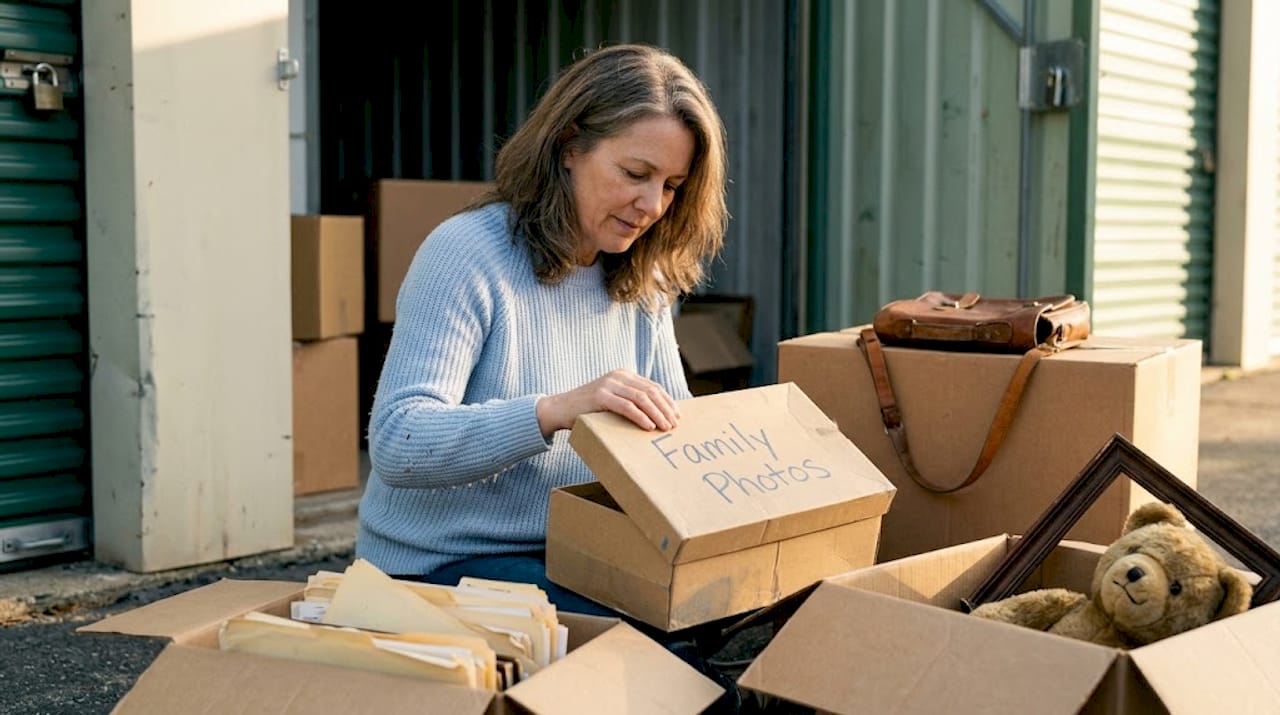
Many states legally require that personal documents and photos be returned via facility or buyer obligation. This is not universal, but it's more common than most people realize.
Here's a comparison of your options before and after auction:
| Situation | What you can recover | Who to contact |
|---|---|---|
| Before auction | Everything | Storage facility |
| Day of auction | Everything (if you pay) | Facility manager |
| Just after auction | Personal papers, photos, IDs | Facility or buyer |
| Weeks after auction | Sentimental items only | Auction buyer directly |
"For sentimental items, contact the facility immediately upon notice. Post-auction, the facility may hold or return documents, and ethical buyers often reunite family items when asked."
Steps to take if your unit has already been auctioned:
- Call the facility the same day you find out. Ask if they retained any personal documents or photos before releasing the unit to the buyer.
- Request the buyer's contact information. Facilities may not always share this, but it's worth asking.
- Reach out to the buyer directly and be honest. Explain what you're looking for and why it matters. Many buyers are willing to help.
- File a report on a reunification platform. Services like help after auction exist specifically to connect previous owners with buyers.
Many storage auction myths suggest buyers are adversarial, but auction recovery myths explained shows that most buyers have no interest in keeping family photos or personal papers. They want resellable goods. Your memories are often the last thing they want to hold onto.
Special cases: Service members, wrongful auctions, and rare success stories
Aside from the usual process, certain cases have extra rules or even rare positive turnarounds. Some situations fall outside the standard lien timeline and deserve special attention.
- Military families: Active duty service members may have additional protections. Courts can require a court order before a unit can be auctioned, and SCRA (Servicemembers Civil Relief Act) implications may apply.
- Wrongful auctions: If a facility failed to send proper notice, you may have grounds for a lawsuit. Legal rights for wrongful auctions outlines what constitutes improper process.
- Informal reunification post-sale: In rare cases, buyers voluntarily return entire collections of personal items after learning the story behind them. These outcomes depend heavily on storage unit auction outcomes and the individual buyer's ethics.
"Edge cases include military protections requiring court orders, wrongful auction lawsuits for improper notice, and sentimental recovery post-sale through buyer ethics or facility reunification efforts."
The truth about reunification: What most guides don't tell you
Most articles about storage unit reunification focus on the legal steps and leave out the emotional reality. Here's what we've seen working directly in this space: the system is not designed to help you. It's designed to help facilities recover unpaid rent as efficiently as possible.
That's not cynicism. That's just the truth. Facilities are not villains. They're businesses dealing with unpaid accounts, and the lien process is their legal tool. But it means that reunification is only as effective as how quickly you act.
Most units sell for surprisingly low amounts. The emotional value of what's inside almost never matches the auction price. That gap is where the real tragedy lives. A unit full of a grandmother's belongings might sell for a few hundred dollars to a buyer who has no idea what they're holding.
Keeping your contact info updated with the facility is one of the most underrated protective steps you can take. Reunification is dramatically easier before auction, and that only happens if notices actually reach you.
What we believe at Cut The Lock is that the worst outcome is not the auction itself. It's the silence afterward, when no one tries to reconnect the items with the people who lost them. That's the gap we exist to fill. If you want to understand your realistic reunification outcomes, go in with clear expectations and act fast.
How Cut The Lock helps you recover lost storage items
If your unit has already been auctioned or you're worried about items that may have slipped through the cracks, dedicated help exists for exactly this situation.
Cut The Lock buys abandoned storage units, catalogs every item inside, and actively works to reconnect original owners with their belongings. You can report a lost item directly on the platform, browse recently acquired units, and flag the specific things that matter most to you. Whether it's a photo album, a military medal, or a child's artwork, we take those requests seriously. If you're not sure where to start, get help after storage auction walks you through the process. And if you're still searching for a specific item, how to find your belongings gives you a clear path forward.
Frequently asked questions
Can I get my belongings back if my storage unit was auctioned off?
You can often recover personal or sentimental items if the facility or buyer cooperates, but personal documents and photos are the most commonly returned items. Most bulk belongings are gone once sold.
What do I need to do to stop my storage unit from being auctioned?
Pay all overdue rent and fees before the sale is finalized. Owners who pay all outstanding costs before the auction completes can redeem the unit and regain full access.
Is there a deadline for reclaiming my unit before auction?
Yes. You typically have 30 to 90 days from the missed payment, and redemption is possible up until the sale is finalized, depending on your state's lien laws.
Can the facility or auction buyer refuse to return my family photos or documents?
In many states, personal items must be returned by the facility or buyer, but cooperation varies. Local law and individual ethics both play a role in how this unfolds.