
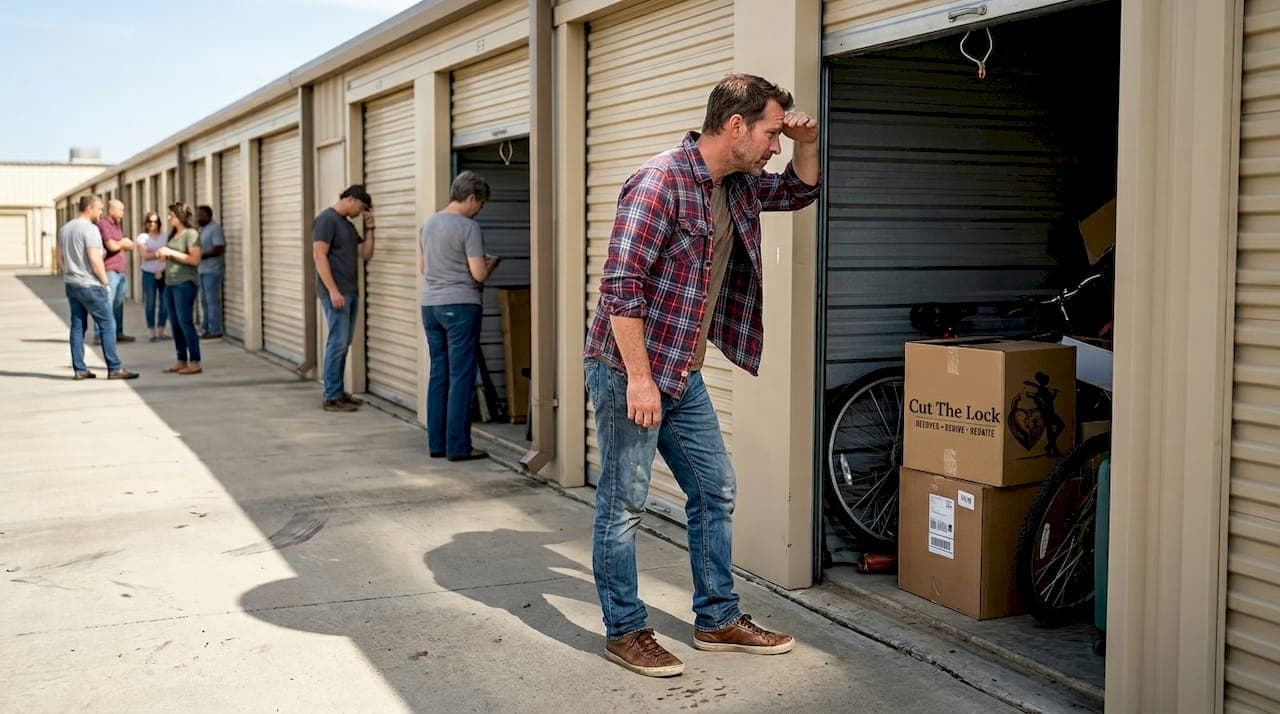
Storage unit auctions look thrilling on TV, but the reality is far more nuanced, especially if you're hoping to recover lost belongings or flip contents for profit. Millions of units go to auction every year when renters fall behind on payments, and the buyers who show up range from seasoned resellers to heartbroken families searching for irreplaceable memories. Most walk away surprised by how different the experience is from what they expected. This guide walks you through every step, from setting up your account to clearing out a unit responsibly, so you can approach the process with clear eyes and a solid plan.
Table of Contents
- Understanding storage unit auctions
- Getting prepared: What you need before bidding
- How to bid and win: Auction day steps
- After the auction: Clearing out, legalities, and responsibilities
- A realistic perspective: What most guides miss about buying storage units
- How Cut The Lock helps you recover, resell, or reconnect
- Frequently asked questions
Key Takeaways
| Point | Details |
|---|---|
| Sentimental recovery is rare | Buying a unit at auction almost never results in recovering lost personal belongings. |
| Preparation is critical | Research, budgeting, and bringing the right tools set you up for auction success. |
| Set a strict budget | Limit your maximum bid to 25% of estimated resale value minus costs to avoid losses. |
| Legal and ethical rules | Returning personal documents is sometimes required and nearly always a good practice. |
| Profit isn’t guaranteed | Profits rely on skill, discipline, and sometimes luck—not just bidding high or often. |
Understanding storage unit auctions
Storage facilities auction off units when a renter stops paying and stops responding. After a legally required waiting period, which varies by state, the facility can sell the unit's contents to recover unpaid rent. The original owner loses all claim to whatever's inside once the auction closes. That's a hard reality worth understanding before you bid.
Three main types of buyers show up at these auctions, and each brings a completely different motivation:
| Buyer type | Primary motivation | Main risk |
|---|---|---|
| Reseller | Profit from flipping contents | Overpaying for low-value units |
| Sentimental buyer | Recovering personal items | Very low odds of finding specific items |
| Hobbyist | Thrill of discovery | Inconsistent returns |
Resellers dominate the market. They treat bidding like a business, calculating estimated resale value before placing a single dollar. Hobbyists enjoy the unpredictability. Sentimental buyers, often people who lost their own items in a previous auction, are the most emotionally invested and, unfortunately, the most likely to be disappointed.
Here's the hard truth about finding lost items after an auction: you almost never find your specific items by bidding at random auctions. Units are spread across thousands of facilities nationwide. The unit that held your family photos is almost certainly not the one you're bidding on today. Knowing what happens after a unit is auctioned gives you a much more realistic picture of the odds involved.
That said, buyers do sometimes find deeply personal items inside units they win. When that happens, the ethical response matters.
"For sentimental recovery, units are sold as-is with a low chance of targeting specific items. Buyers sometimes return personal items voluntarily, and some states legally require it."
For most buyers, the goal is simpler: find good stuff, sell it, make a return. That's a realistic and achievable goal when you prepare correctly.
Once you're clear on why and how units are auctioned, the next important step is preparing yourself for the bidding process.
Getting prepared: What you need before bidding
Showing up to a storage auction unprepared is a fast way to overpay, miss out entirely, or create legal headaches for yourself. Preparation isn't glamorous, but it's where most successful buyers build their edge.
Start by creating accounts on major auction platforms. Sites like StorageTreasures and Storage Auctions are the dominant online marketplaces. Some facilities run their own in-person auctions, while others use a hybrid model. Each has different rules and timelines.
| Auction type | Format | Pros | Cons |
|---|---|---|---|
| Online | Remote bidding via platform | Convenient, wide reach | Can't view unit in person |
| In-person | Bidding at the facility | Visual inspection possible | Travel required, limited inventory |
| Hybrid | View in-person, bid online | Best of both worlds | More competition |
Once you've picked your platform, research the facilities in your area. Urban areas tend to have higher-value units. Facilities in wealthier zip codes often contain better furniture, electronics, and collectibles. This isn't guaranteed, but it's a useful starting filter.
Before auction day, gather everything you'll need:
- Valid government ID (required at most facilities)
- Cash or card for payment and deposits
- Your own lock to secure the unit the moment you win
- Gloves and work clothes for sorting through contents
- A truck or van if you plan to clear the unit same-day
- Boxes and bags for sorting items quickly on-site
Budgeting is the step most beginners skip. A smart approach is to set a strict budget and calculate your maximum bid at 25% of your estimated resale value minus anticipated costs like hauling and cleaning. That formula protects your margin when contents don't sell as planned.
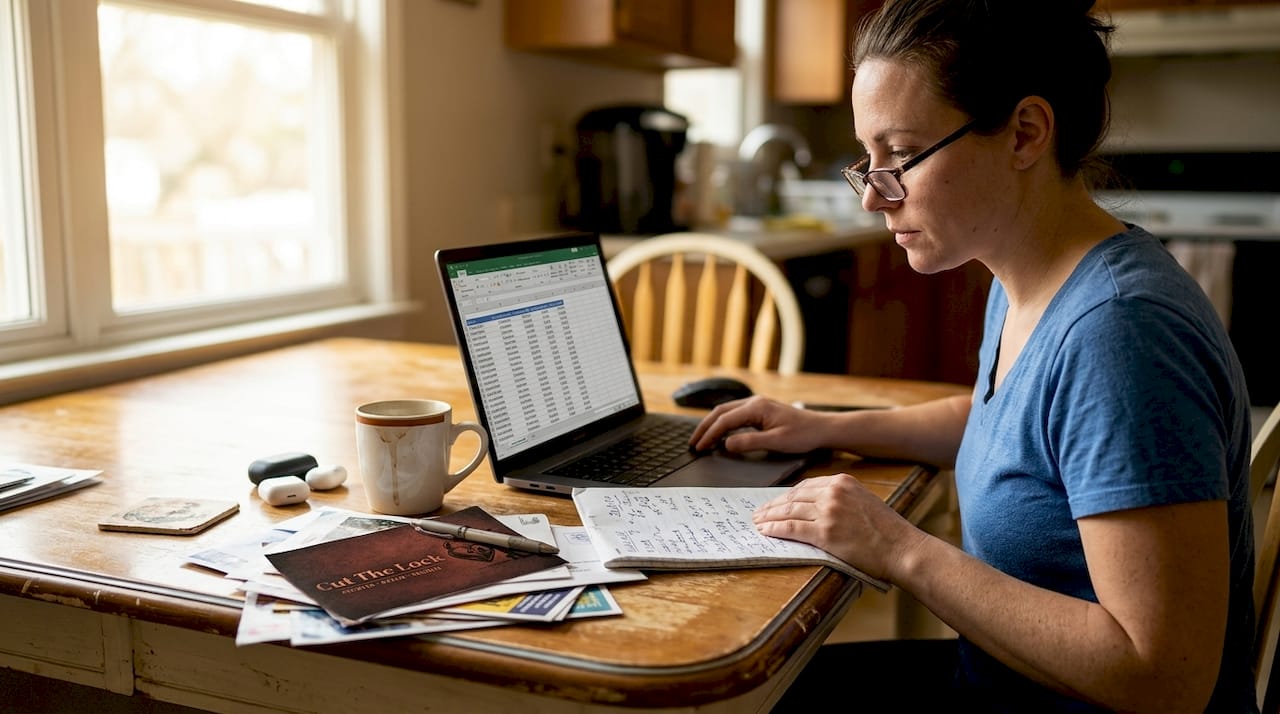
Pro Tip: Build a simple spreadsheet before your first auction. List each unit you're considering, your estimated contents value, anticipated costs, and your maximum bid. You can also use it to track item prices after selling to sharpen your estimates over time.
You can also browse available units ahead of time to get a feel for what's out there and what typical contents look like in your market.
With preparation out of the way, you're ready to jump into the step-by-step process of bidding and buying.
How to bid and win: Auction day steps
Auction day moves fast. Whether you're bidding online or standing outside a unit with a crowd, decisions happen in seconds. Here's exactly what to do:
- Arrive early or log in before the auction opens. Check any last-minute rules, confirm your payment method is ready, and review your notes on the units you're targeting.
- Observe the unit opening carefully. Most facilities allow a brief look from the doorway. Don't enter. Scan quickly for visible high-value items like furniture, appliances, electronics, or shelving systems.
- Estimate value in real time. Look for volume and density. A unit packed floor to ceiling with organized boxes is often worth more than a half-empty one with random bags.
- Start your bidding low. Especially on smaller units. You want to test competition levels without overcommitting early.
- Use your budget ceiling as your hard stop. Your max bid should be calculated as 25% of estimated resale value minus all costs. Never go above it.
- Watch other bidders for signals. Experienced buyers often know something you don't. If a veteran walks away without bidding, that's a signal.
- Win or walk away clean. If it goes above your number, let it go. Another unit is always coming.
Pro Tip: Don't show excitement when you spot something valuable. Other bidders read body language. Keep a neutral face and stay quiet about what you noticed.
One rookie mistake is bidding on multiple units back to back without adjusting your budget. Each win commits cash and hauling time. If you win two units in a row and both need same-day clearing, you could be overwhelmed fast.
For anyone recovering lost items through auctions, the bidding process itself won't give you meaningful control over which specific unit you get. Units are auctioned in the order the facility chooses. There's no targeting.
After securing a storage unit, your responsibilities extend beyond just collecting your winnings, especially when others' memories are involved.
After the auction: Clearing out, legalities, and responsibilities
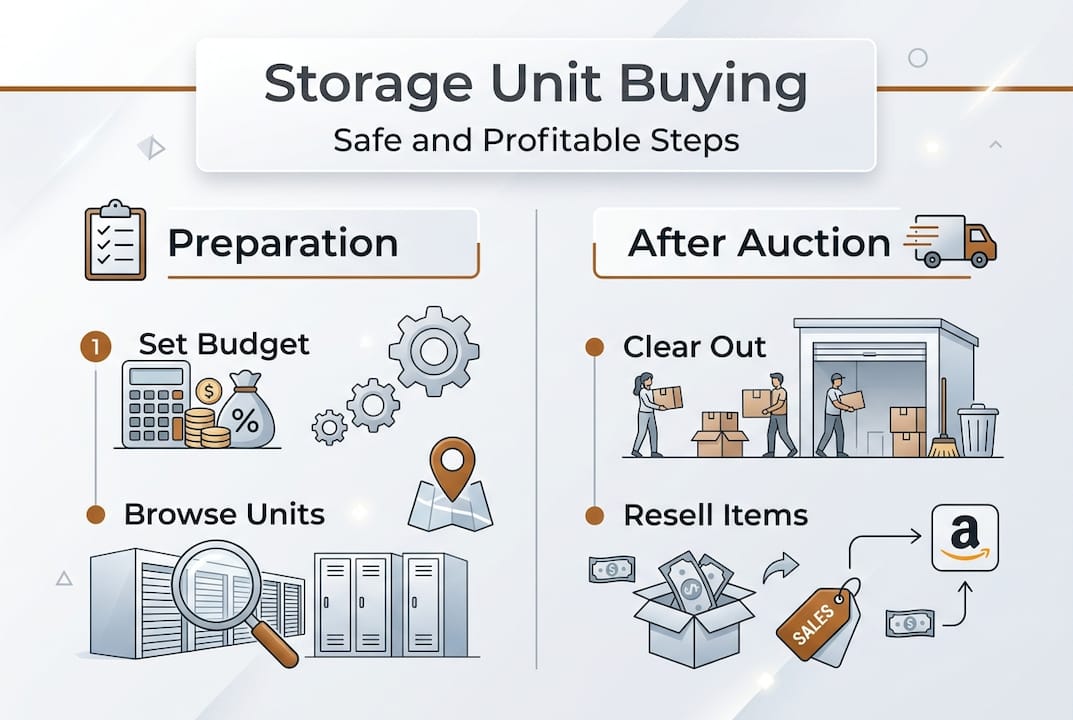
Once you win a unit, the clock starts ticking. Most facilities give you 24 to 72 hours to fully clear the space. Miss that window and you could face fines or forfeit your contents. Move fast and move smart.
When sorting through contents, separate items into clear categories: resell, donate, trash, and hold. The hold category is for anything personal, including photos, documents, prescription medications, identification, and sentimental keepsakes. These items deserve special handling.
"Buyers sometimes return personal items voluntarily, and some states have laws requiring the return of personal documents or photographs to the original owner."
Even where it isn't legally required, returning personal effects is the right thing to do. A box of baby photos or a military medal means nothing to a reseller but everything to the family it came from.
Here's a quick ethical checklist for post-auction handling:
- Do set aside personal photos, IDs, and sentimental items immediately
- Do research your state's rules on returning personal documents
- Do report found items through a platform like reporting found sentimental items
- Don't discard family photos or personal keepsakes in the trash
- Don't sell prescription medications or personal identification documents
- Don't ignore a previous owner who reaches out about their belongings
For reselling the rest, your best channels are eBay for collectibles and electronics, Facebook Marketplace for furniture and household items, and local estate sale operators for large volumes. Price items based on what they're actually selling for, not just listed for. Tools that help with finding rightful owners for lost items also exist for buyers who want to go the extra mile.
Completing these steps responsibly maximizes your gains and minimizes risks. But there are common pitfalls and truths many guides skip, and here's what we've learned.
A realistic perspective: What most guides miss about buying storage units
Here's something most auction guides won't say directly: if you lost your own belongings in a storage auction, buying units at random facilities is very unlikely to help you recover them. Those items were auctioned at a specific facility, to a specific buyer, who has likely already sorted and sold the contents. You won't stumble into them by bidding elsewhere.
TV shows made storage auctions look like treasure hunts with predictable payoffs. The reality is messier. Most units contain ordinary household items worth less than the winning bid when you factor in hauling and time. Profitable reselling requires discipline, not luck.
The realities of lost item recovery are genuinely difficult to accept, but understanding them protects you from making emotional purchasing decisions that cost real money. Buying ten random units hoping to find one piece of your past isn't a strategy, it's a painful and expensive long shot.
For resellers, the upside is real but only with preparation. Know your market, know your costs, and treat every auction like a business decision. Sentiment and strategy rarely mix well in this space.
How Cut The Lock helps you recover, resell, or reconnect
Whether you're looking for help after losing items in a storage auction or you want to buy responsibly, Cut The Lock was built for exactly these moments.
If you're trying to track down personal belongings, start by visiting help with storage auction recovery. Found something that belongs to someone else? You can report lost items directly through our platform and help get it back to the right person. And if you're in the market to buy, browse storage unit finds to see what's available from units we've already carefully cataloged. Every item in our marketplace has been reviewed, which means fewer surprises and more confidence for buyers.
Frequently asked questions
Can I find my old belongings by buying at storage unit auctions?
It is very unlikely. Auctions rarely surface specific items from a previous owner's unit, and the unit containing your belongings was almost certainly sold at a different facility entirely.
What should I bring to a storage unit auction?
Bring a government ID, payment method, a lock, gloves, and a vehicle for transport. Most facilities require valid credentials and payment on the day of the auction.
Are buyers required to return personal items found in a storage unit?
Some states legally require returning personal documents or photos, and many buyers return them voluntarily as a matter of good practice.
How should I set my maximum bid at a storage auction?
A strong approach is to cap your bid at 25% of your estimated resale value after subtracting all anticipated costs like hauling, cleaning, and selling fees.
Is buying storage units profitable?
It can be, but profits require discipline: accurate value estimates, controlled bidding, and efficient reselling. There are no guarantees, and most beginners underestimate hidden costs.