

Most people assume that once a storage unit gets auctioned, everything inside it is gone for good. That's not entirely true. Whether you're searching for a parent's photographs, military medals, or your child's first drawings, there are real, actionable steps you can take to get those items back. This guide walks you through Texas law, the auction timeline, and the most effective strategies for tracking down lost belongings, including what works in Austin specifically and what's mostly wishful thinking.
Table of Contents
- Understanding abandoned storage units and the auction process
- How default notices and liens work: Reclaiming your unit before auction
- Paths to recovering lost items after auction: Strategies and resources
- How to prevent loss: Best practices for Austin storage renters
- The uncomfortable truth most experts won't tell you about recovering auctioned items
- Cut The Lock: Helping Austinites recover lost items from storage auctions
- Frequently asked questions
Key Takeaways
| Point | Details |
|---|---|
| Legal notice required | Austin storage facilities must notify tenants before auction via verified mail or agreed email. |
| Lien payment option | Tenants can reclaim abandoned units by paying full liens prior to auction. |
| Recovery is possible | Lost sentimental items can sometimes be traced and recovered after auction with the right steps. |
| Prevention is best | Timely payments and updated records are key to avoiding auction in the first place. |
| Cut The Lock supports recovery | Austin residents can use Cut The Lock to report lost items and connect with auction buyers. |
Understanding abandoned storage units and the auction process
Before you can recover anything, you need to understand exactly how storage units end up at auction in the first place. In Texas, a storage unit becomes legally "abandoned" when a tenant falls behind on rent and fails to respond to legal notices within a set timeframe. This is not a snap judgment. Facilities follow a structured process governed by state law.
Under Texas Property Code Section 59, facilities must send a notice of default via verified mail or email (if previously agreed to in the contract), and the tenant has the right to pay the full lien amount before the auction takes place. This is a crucial window that many tenants don't realize exists.
Here's a basic breakdown of how the timeline typically works:
- Day 1: Rent goes unpaid
- Days 1 to 30: Facility attempts contact, late fees accumulate
- Day 30 to 45: Formal default notice sent via verified mail or agreed email
- Day 45 to 60: Lien is formally established on the unit's contents
- Day 60 to 90: Auction is advertised and scheduled
- Auction day: Unit contents sold to highest bidder, often through platforms like StorageAuctions.com or in person
"The law gives tenants time and notice. Most people lose their belongings not because the system failed them, but because they didn't know the clock was ticking." — A hard truth from the field
One thing that surprises many Austin residents is how Texas differs from other states. Unlike some states that require newspaper publication of auction notices, Texas allows facilities to meet their legal obligation by posting notice online, which many people simply miss. California, for example, requires physical newspaper notices and gives tenants more time. In Texas, the process can move faster, which is why knowing this auction law guide inside and out is so important.
Key differences between Texas and other states:
| Factor | Texas | California | Florida |
|---|---|---|---|
| Notice method | Verified mail or email | Newspaper + mail | Certified mail |
| Minimum notice period | 14 days after lien | 14 days after lien | 14 days after lien |
| Online auctions allowed | Yes | Yes | Yes |
| Right to redeem before sale | Yes | Yes | Yes |
Once the unit sells, what happens after auction is that everything inside legally transfers to the buyer. The facility keeps enough proceeds to cover back rent and fees. Any remaining funds after those costs are supposed to go back to the former tenant. In practice, many tenants never reclaim those leftover funds because they don't know they're entitled to them.
How default notices and liens work: Reclaiming your unit before auction
If you've received a default notice, you still have time. This is the most critical stage, and acting fast can mean the difference between recovering everything and losing it permanently. Here's exactly what to do:
- Read the notice carefully. Identify the total lien amount owed, the deadlines listed, and the name of the facility manager you need to contact.
- Call the facility immediately. Don't wait for a better time. Same-day contact signals that you're serious and sometimes prompts managers to pause the process while you gather funds.
- Ask about a payment plan. Many Austin facilities are willing to negotiate, especially for long-term tenants. This isn't guaranteed, but it's always worth asking directly.
- Pay the full lien amount before the auction. Under Texas Property Code Section 59, paying the lien in full before auction payment legally stops the sale and returns access to your unit.
- Get written confirmation of reinstatement. Once paid, request written proof that your account is current and your unit is no longer scheduled for auction.
A storage lien works like this: the facility holds your stored belongings as collateral for unpaid rent, similar to how a mechanic can hold your car until you pay for repairs. Once a lien is formally filed, you can't remove items from the unit until the debt is cleared. If the lien isn't satisfied, the facility has the legal right to auction the contents to recover what they're owed.
Pro Tip: Set a calendar reminder for your storage rent due date with a 5-day buffer. If you know cash will be tight that month, contact the facility before you miss payment, not after. Proactive communication almost always results in better outcomes than reactive scrambling.
The most common mistakes tenants make after receiving a notice include ignoring it hoping it'll go away, sending partial payment without confirmation it stops the auction, and assuming they have more time than they actually do. Finding lost auction items is far harder than preventing the loss in the first place. Every day of delay narrows your options.
Paths to recovering lost items after auction: Strategies and resources
If the auction has already happened, you're not out of options. You are, however, in a situation where persistence and speed matter enormously. Here's what actually works.

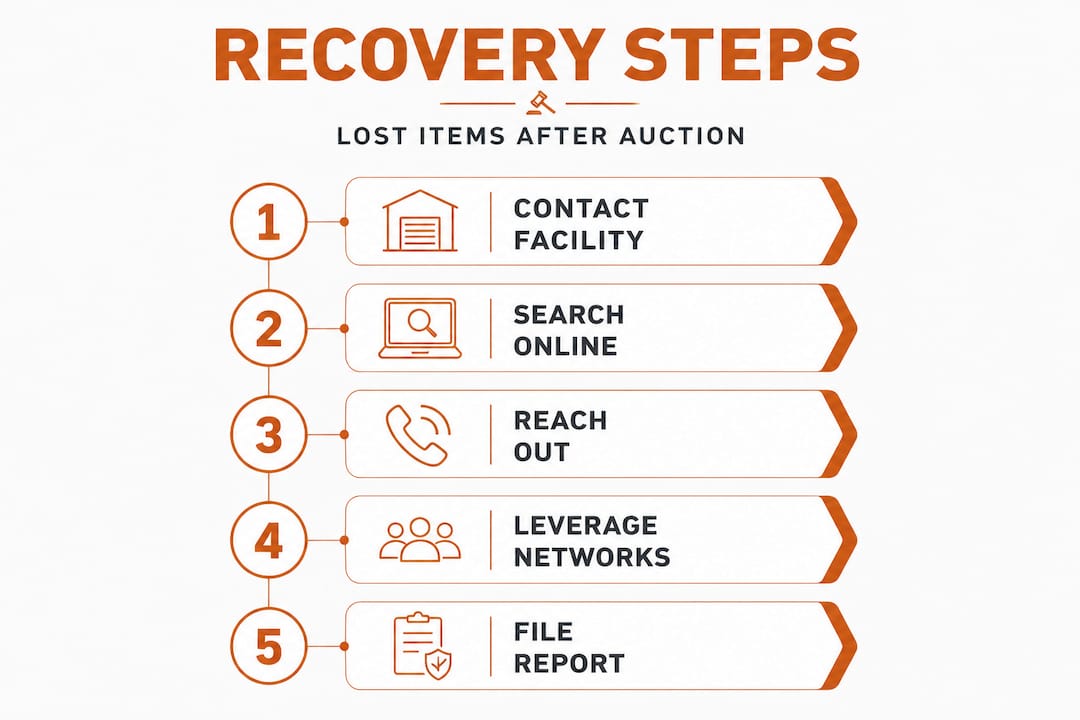
Step one: Contact the storage facility. Ask for the name or contact information of the winning bidder. Facilities aren't always required to share this, but many will. Some buyers leave contact details intentionally because they want to connect with former owners, especially when they find personal or sentimental items.
Step two: Search online auction platforms. Sites like StorageAuctions.com, Storage Treasures, and Facebook Marketplace are where buyers often list unit contents. Search by city (Austin, TX) and look for listings that match the timeframe of your auction. You may recognize items from photos.
Step three: Reach out directly and humanize the ask. When you find a buyer or listing, lead with the personal story. Don't open with a legal threat or a vague inquiry. Explain what you're looking for, why it matters, and that you're willing to pay fair market value for specific items. Most buyers want money for the stuff, not your grandmother's wedding album.
Step four: Use local Austin networks. Facebook groups like "Austin Buy Nothing" and neighborhood-specific Nextdoor threads have helped people recover lost items by sharing posts that reach thousands of locals. Word of mouth still works.
Step five: Report your lost items formally. Locating lost belongings through a dedicated recovery service means your item description is searchable by buyers who are actively looking to return things. This passive approach works alongside active outreach.
| Recovery strategy | Success rate | Time required | Cost |
|---|---|---|---|
| Direct buyer contact | Moderate | Hours to days | Free |
| Online platform search | Moderate | Days to weeks | Free |
| Local Austin community networks | Moderate to high | Days | Free |
| Dedicated recovery platform | High with fast action | Days to weeks | Varies |
| Legal action | Low for sentimental items | Months | High |
Pro Tip: Take screenshots of every online listing that could contain your belongings. Listings disappear quickly once items sell. Documentation also helps if you need to make a formal report or escalate your search.
Under Texas Property Code Section 59, once your unit is auctioned, legal title transfers to the buyer. That means recovery is voluntary on the buyer's part, not legally required. This is why the human approach outperforms any legal demand letter. You're asking for a favor, and making it easy and worthwhile for the buyer to say yes is your best strategy.
If you're ready to search, recover lost items through platforms built specifically for this purpose rather than generic marketplaces. The difference in results is significant.
How to prevent loss: Best practices for Austin storage renters
The best recovery strategy is the one you never need. If you still have a storage unit or plan to rent one, these practices can protect your most valuable belongings from ever reaching auction.
- Keep your contact information updated. Facilities send default notices to the address and email on file. If you've moved and haven't updated your contact info, you may miss critical notices entirely.
- Set up automatic payments. Most Austin facilities offer autopay. Use it. Missing a payment due to forgetfulness is one of the most avoidable ways to start the default process.
- Photograph and inventory everything before storing it. If you ever need to make a recovery claim, a detailed inventory with photos is far more useful than a vague description. Include serial numbers for electronics and close-up shots of anything sentimental.
- Store irreplaceable items strategically. Some people keep truly priceless items, like family photos or legal documents, in a fireproof home safe rather than a storage unit. A storage unit should hold things you can afford to lose, not things you can't replace.
- Read your rental contract thoroughly. Know exactly when rent is due, what counts as legal notice, and how much time you have to pay a lien before auction. Per Texas Property Code Section 59, understanding your tenant rights upfront prevents confusion later.
- Know the warning signs. If you're skipping rent payments, struggling to access funds, or avoiding the facility manager's calls, those are signals to act now, not later.
Pro Tip: Before disassembling furniture for storage, photograph each piece fully assembled and label every bag of hardware. Detailed records make recovery identification much easier and protect your investment in the event of loss.
If you want to stay ahead of auction trends 2026, knowing what buyers expect to find and how competitive the Austin market has become can also help you make smarter decisions about what to store and how to protect it.
The uncomfortable truth most experts won't tell you about recovering auctioned items
Here's what experience actually teaches, and it runs counter to what most recovery guides suggest.
The official channels, meaning facility managers, auction platforms, and legal notices, are rarely where reunions happen. The real recoveries happen through persistence, community, and personal appeals. A buyer who discovers your child's drawings or a box of letters doesn't have a legal obligation to return them. But most people, when approached humanely and respectfully, want to do the right thing.
What doesn't work is what most people try first: demanding the facility give you buyer information, threatening legal action, or posting angrily on social media. These approaches put buyers and facilities on the defensive. They close doors rather than open them.
What does work is this: be specific, be personal, and make it easy for someone to help you. Post photos of what you're looking for. Offer a fair reward. Share the story. In Austin, a city with a strong community identity, this kind of appeal resonates.
The harder truth is that most items are never recovered. Buyers move fast. Unit contents get sorted, sold, and scattered within days. The window for recovery is short, which is why finding your belongings through a platform that catalogs and holds items is so much more effective than cold outreach weeks after the fact.
Proactive action beats reactive regret every time. The tenants who recover their belongings are almost always the ones who act within the first 48 to 72 hours of learning about the auction.
Cut The Lock: Helping Austinites recover lost items from storage auctions
If you've been through a storage auction and are searching for something irreplaceable, Cut The Lock was built for exactly this moment.

Cut The Lock buys abandoned storage units across the Austin area, photographs and catalogs every item inside, and then actively works to connect those items with their original owners. If your unit was auctioned and you're not sure where to start, you can recover lost items by submitting a description of what you're looking for. The team searches existing inventory and flags matches. You can also visit getting your stuff back to understand the full process, or go directly to report a lost item to get your search on record. Recovery isn't guaranteed, but having a team actively looking on your behalf dramatically improves your odds. One person's worst day doesn't have to be permanent.
Frequently asked questions
Can I reclaim my storage unit if I pay after receiving a default notice?
Yes. Under Texas Property Code Section 59, you can pay the full lien before the auction takes place to legally stop the sale and regain access to your unit.
What happens to sentimental items once my unit is auctioned?
Once auctioned, all contents legally transfer to the buyer. However, you can often locate specific items by contacting the buyer directly or searching online listings from auction platforms in the Austin area.
Are notices always sent via mail, or can email count?
Email counts as legal notification if you agreed to it in your storage contract. Texas law allows verified email as an official notice method when written into the original rental agreement.
How can I increase my chances of recovering lost items after auction?
Act within the first 48 to 72 hours. Report your loss, search online listings, and contact the buyer directly with a personal, specific appeal rather than a legal demand.
Recommended
- Lost Items Storage Auction — How to Find Your Belongings | Cut The Lock
- 5 Ways to Find Lost Items After a Storage Auction in Texas | Cut The Lock
- Lost Items in Storage Auction? We Can Help | Cut The Lock
- What Happens to Your Stuff When a Storage Unit is Auctioned? | Cut The Lock
- Auction strategies for small businesses: Maximize asset recovery | Blog | Insights on Asset Liquidation and Auction Trends