

Storage unit auctions look like treasure hunts on TV, but the reality is far more complicated for everyone involved. Whether you're a buyer hoping to flip finds for profit or a former tenant who lost access to irreplaceable belongings, the process carries real legal weight and emotional stakes. Legal and ethical complexities affect both sides of every sale. This article breaks down exactly how auctions unfold, what buyers actually risk, and what real options former tenants hold, so you can walk into any situation with clear eyes and a solid plan.
Table of Contents
- How storage unit resale auctions actually work
- Who can participate, what can be found, and buyer realities
- Understanding the legal rules and risks
- Options and rights for former storage tenants
- A fresh take: Why storage unit resale is less about luck and more about knowledge
- Need help with a storage unit resale or lost items?
- Frequently asked questions
Key Takeaways
| Point | Details |
|---|---|
| Auctions follow strict legal rules | Storage unit resale is triggered by non-payment and managed by state-specific lien laws. |
| Buyers face real risks | Storage unit buyers can profit but must be ready for hidden costs, legal issues, and ethical responsibilities. |
| Former tenants can act early | Paying off the debt before auction completes is the surest way to keep your belongings. |
| Returned items after auction | Personal effects are usually returned voluntarily by buyers or facilities, not by legal requirement. |
| Preparation beats luck | Success in storage unit resale depends more on legal knowledge and research than chance. |
How storage unit resale auctions actually work
Most people picture a padlock getting cut and strangers digging through boxes. The real process is far more structured, and understanding it changes how both buyers and tenants should approach the whole situation.
When a tenant stops paying rent, the clock starts. Auctions are triggered after 30 to 90 days of non-payment, depending on the state. During that window, the facility is legally required to send written notices to the tenant, post a public lien notice, and follow specific advertising rules before any sale can happen. Skipping even one step can invalidate the entire auction.
Here's how the process typically unfolds, step by step:
- Tenant misses payments and the facility begins the lien process after a grace period.
- Legal notices are sent to the tenant's last known address, often by certified mail.
- Public notice is posted, usually in a local newspaper or online auction platform.
- The auction date is set and advertised, often through sites like StorageTreasures or Bid13.
- Buyers preview the unit from the doorway only. No entering, no touching, no moving boxes.
- Bidding happens, either in person or online, with the highest bid winning.
- The winner pays in full, immediately, in cash or approved payment.
- The unit must be cleared within 24 to 48 hours, completely emptied and swept out.
One rule surprises most new buyers: personal items like IDs, documents, and firearms must be handed over to facility staff, not kept or resold. This is a legal requirement, not a suggestion.
"The auction process isn't a free-for-all. It's a legally governed sale with obligations on every party involved."
Pay attention to what happens to the money. Auction proceeds first cover the tenant's overdue balance, fees, and auction costs. If anything is left over, that surplus goes back to the original tenant. It rarely happens, but it's worth knowing. To get a clearer picture of what happens when units go to auction, the details matter more than most people realize.
Who can participate, what can be found, and buyer realities
Anyone over 18 can bid at a public storage auction, with a few exceptions. Facility employees and their immediate family members are typically barred from participating. Some states also restrict former tenants of that specific unit from bidding on their own belongings.
So what do buyers actually find? The honest answer is: it varies wildly. Common finds include:
- Furniture (beds, dressers, couches, shelving)
- Electronics (TVs, gaming consoles, laptops, though often older models)
- Clothing and shoes, sometimes brand new with tags
- Tools and equipment, which tend to hold strong resale value
- Boxes of household goods, which could be anything from kitchenware to collectibles
- Sentimental items like photo albums, artwork, and family keepsakes
High-value surprises do happen. Jewelry, vintage items, and rare collectibles occasionally show up. But so does a lot of junk. Broken furniture, outdated electronics, and bags of old clothes are just as common.
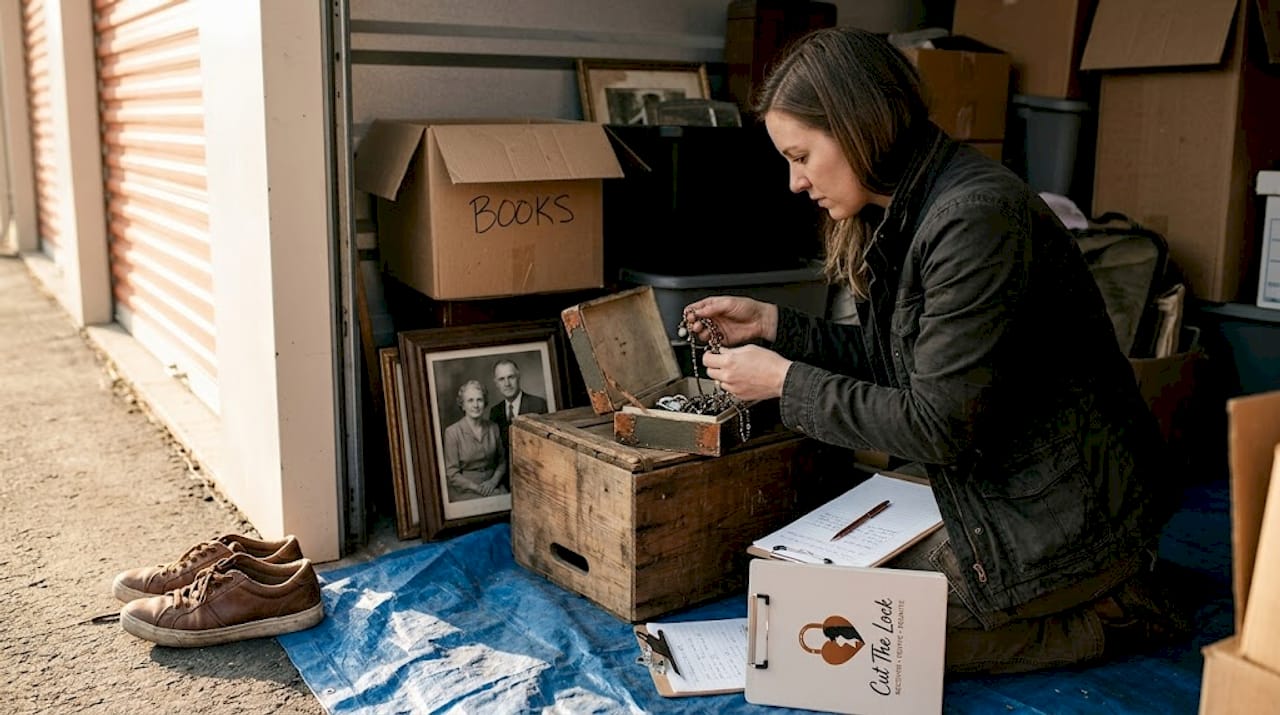
Experienced flippers average 2 to 3x ROI, with average bids ranging from $50 to $300 and a general rule of bidding no more than 25% of the visible value from the doorway. That last part is critical. You cannot see everything inside, so you're always betting on what's hidden behind the first row of boxes.
Buyers also carry responsibilities most beginners overlook. You must dispose of everything you don't keep, legally and at your own expense. Dumping is illegal and can result in fines. If hazardous materials show up, like old paint, chemicals, or biological waste, removal costs fall on you.
Pro Tip: Before bidding on any unit, estimate the cost of hauling and disposal first. Factor that into your maximum bid. A unit that looks like a $200 win can turn into a loss if it costs $150 to dump what's left.
If you're a former tenant wondering where your belongings ended up, you can start by finding items after auction through platforms built specifically for this purpose. And if you want to see what kinds of items come out of these sales, you can browse auction finds to get a real sense of what the market looks like.
Understanding the legal rules and risks
Storage auction law is not uniform across the country. Every state sets its own rules on how and when facilities can auction a unit, what notices must be sent, and what buyers can legally do with the contents. This patchwork of regulations creates real risk for buyers who assume the process is the same everywhere.
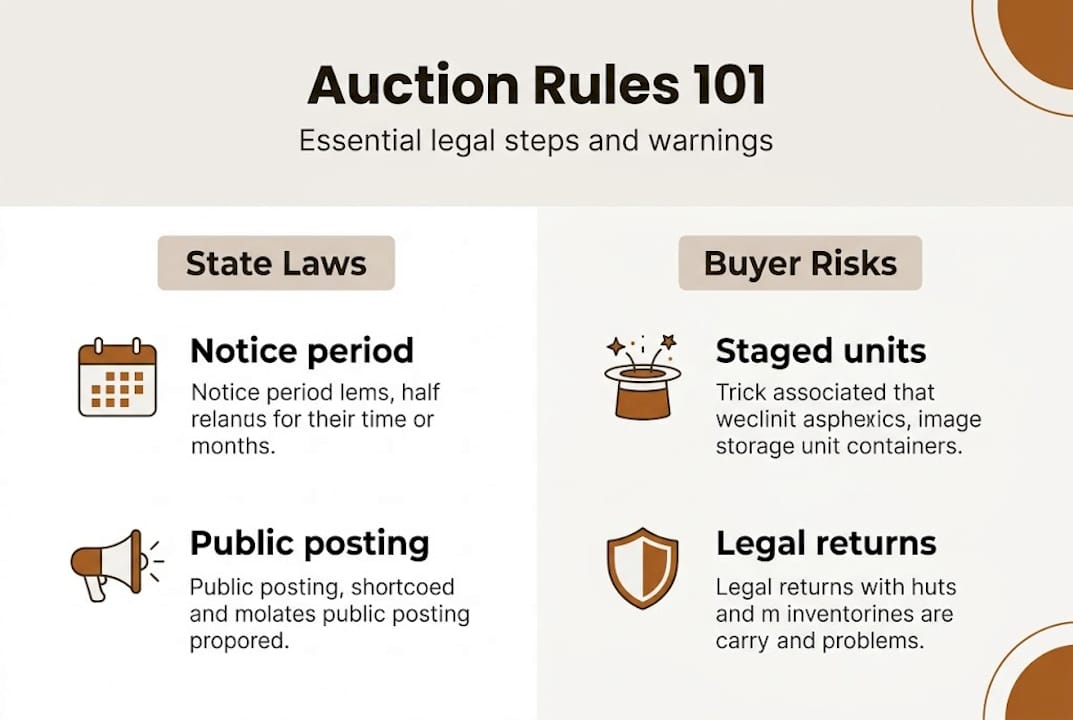
Here's a quick comparison of how key legal elements differ:
| Legal element | Strict states | Lenient states |
|---|---|---|
| Notice requirements | Certified mail plus public posting | Basic written notice only |
| Auction timing | 60 to 90 days minimum | As few as 30 days |
| Surplus return rules | Mandatory, specific timelines | Varies or not required |
| Online auction rules | Explicitly regulated | Often unaddressed |
State-specific lien laws are critical. If a facility skips a required notice step, the entire sale can be voided, leaving the buyer without legal ownership of the contents even after paying. That's a real financial risk, not a theoretical one.
"Always verify the facility followed proper notice procedures before you bid. A voided sale means you lose your money and the goods."
One protection most buyers don't know about: military service members are protected under the federal Servicemembers Civil Relief Act (SCRA). If a unit belongs to an active duty service member, the auction may be legally off-limits entirely. Buying that unit could expose you to serious legal liability.
Other risks buyers face include staged units, which are units packed with worthless items to look full and valuable from the doorway. Hidden hazards like mold, pest infestations, or chemical containers are also real possibilities. And there are zero warranties. What you see is what you get, and what you don't see is still your problem.
Pro Tip: Research the storage unit recovery laws in your state before your first bid. A 30-minute read could save you from a legally invalid purchase or an unexpected disposal bill.
Options and rights for former storage tenants
If you've lost a storage unit or know someone who has, the situation feels permanent. It doesn't have to be, at least not entirely. Former tenants have more options than most people realize, but timing is everything.
Here's what you can actually do:
- Redeem before the gavel falls. Tenants can reclaim their unit by paying the full overdue balance at any point before the winning bidder completes payment. Even minutes before. This is called the right of redemption, and it's powerful.
- Request personal items after the sale. Once the auction closes, you have no legal claim to anything inside. But buyers sometimes return personal effects voluntarily, especially items with obvious sentimental value like photos or documents.
- Challenge an improper sale. If the facility failed to follow proper notice procedures, you may have legal grounds to dispute the auction. Consult a local attorney quickly, as time limits apply.
- Contact the facility directly. Staff often know who bought a unit and may be willing to pass along contact information if you're looking for personal belongings.
Here's a simple timeline showing when each option is available:
| Timing | Option available |
|---|---|
| Before auction date | Full redemption by paying overdue balance |
| Day of auction, before payment | Last-chance redemption still possible |
| After buyer pays | No legal claim, but personal item requests possible |
| Within days of auction | Legal challenge if notice procedures were violated |
Pro Tip: If you've lost a unit, contact both the facility and the buyer as soon as possible. Be respectful and direct. Many buyers are willing to return photos, documents, and other clearly personal items at no charge. Hostility closes that door fast.
For a full breakdown of your options, explore ways to recover lost items or get specific guidance on help after a storage auction.
A fresh take: Why storage unit resale is less about luck and more about knowledge
TV shows like Storage Wars built an entire mythology around the lucky find. The dramatic reveal, the shocking appraisal, the big payday. It makes for great television. It makes for terrible preparation.
The buyers who consistently profit from storage unit resale aren't lucky. They know their state's lien laws cold. They understand disposal costs before they bid. They recognize what items are actually worth, not what they hope they're worth. They also treat former tenants with basic human decency, returning personal items when they can.
And former tenants? They often have far more power than they realize, especially before the auction happens. Acting early, even imperfectly, beats waiting and hoping. The right of redemption exists for a reason, and it works right up until the last moment.
The uncomfortable truth is that most bad outcomes on both sides come from not knowing the rules. A buyer who doesn't know about SCRA protections can end up in legal trouble. A tenant who doesn't know about redemption rights loses everything unnecessarily. Knowledge isn't just an advantage here. It's the whole game. Finding items after an auction is possible more often than people think, but only if you know where to look and act fast.
Need help with a storage unit resale or lost items?
Whether you're a buyer trying to do right by the people whose belongings you've purchased, or a former tenant hoping to get back something irreplaceable, you don't have to figure this out alone.

Cut The Lock was built specifically for this moment. We buy abandoned storage units, catalog every single item inside, and work to connect original owners with the things that matter most before reselling everything else. If you need to recover lost auction items, we can help you search. If you want to report a lost item so buyers can find you, that option exists too. And if you're looking to find storage auction items ethically sourced and fairly priced, our marketplace is the place to start.
Frequently asked questions
How soon after missed payments does a storage unit go to auction?
Storage units are typically auctioned 30 to 90 days after missed payments, depending on state law and facility policy. The facility must follow specific notice and advertising steps before any sale can legally proceed.
Can former tenants buy back their items after a storage auction?
After the auction closes, former tenants have no legal right to the contents. However, buyers sometimes return personal effects like photos and documents as a courtesy when asked respectfully.
Are there risks for buyers at storage unit auctions?
Yes. No warranties and potential hazards like mold, staged units, and unexpected disposal costs are all real possibilities. Legal challenges from improper sales add another layer of financial risk.
What items must buyers legally return to the facility?
Personal docs, photos, IDs, and firearms must be handed over to facility staff after purchase. Keeping or reselling these items is not permitted under the terms of most auction agreements.
How can I find lost items after a storage auction?
You can contact the facility directly, reach out to the auction buyer if you can identify them, or use dedicated platforms like Cut The Lock that catalog auctioned items and actively work to reunite owners with their belongings.
Recommended
- What Happens to Your Stuff When a Storage Unit is Auctioned? | Cut The Lock
- Lost Items Storage Auction — How to Find Your Belongings | Cut The Lock
- Lost Items in Storage Auction? We Can Help | Cut The Lock
- 5 Ways to Find Lost Items After a Storage Auction in Texas | Cut The Lock
- Buying & Selling Guidance | Chicago Home Inspect LLC
- Benefits of Renting A Storage Unit When Moving Locally