

Imagine missing one storage payment in Texas, and suddenly everything you own is at risk. Your grandmother's jewelry, your kids' first drawings, boxes of documents you can't replace. For tenants, the fear is real. For facility owners, the legal exposure is just as serious. Texas lien law is specific, and when inventory isn't handled correctly, both sides can lose. This guide walks through what the law requires, how to build a solid inventory process, and what you can do to protect yourself whether you're renting a unit or running a facility.
Table of Contents
- Understand Texas storage lien laws and key requirements
- Gather tools and prepare for storage inventory
- Step-by-step: Conducting a compliant storage inventory in Texas
- Avoiding common mistakes and ensuring legal compliance
- Why following the rules isn't enough: Real-world lessons from Texas storage auctions
- Need help recovering lost items or managing your storage inventory?
- Frequently asked questions
Key Takeaways
| Point | Details |
|---|---|
| Know Texas rules | Following Texas storage lien laws protects both tenants and owners from lawsuits and loss. |
| Document everything | Thorough records with photos and notices are your best legal and practical defense. |
| Use the right tools | Systematic inventory procedures and the right supplies make managing storage safer and easier. |
| Avoid common mistakes | Most disputes happen when inventory or notification steps are skipped or incomplete. |
Understand Texas storage lien laws and key requirements
Texas lien law doesn't leave much room for guesswork. When a tenant falls behind on payments, the process moves through distinct phases, and each one carries legal weight. Understanding the timeline is the first step to staying protected.
Here's how the process typically unfolds:
- Default phase: Tenant misses payment; late fees begin accumulating
- Notification phase: Facility owner sends written notice by certified mail
- Pre-auction phase: Additional notices are sent; tenant has a chance to pay and reclaim goods
- Auction phase (Days 91 to 110): Lien enforcement inventory is conducted before the sale; this is legally required
The inventory step during lien enforcement is not optional. Texas law requires a detailed record of unit contents before any sale can proceed. That means written descriptions, photographs, and documentation of the condition of items. Skipping this step or doing it poorly can invalidate the entire lien, which means the facility owner could face a lawsuit even if the tenant genuinely owed money.
Special situations that require extra steps:
- Vehicles and boats: You must notify the Texas DMV and any known lienholders before proceeding
- Military tenants: The Servicemembers Civil Relief Act (SCRA) provides protections that pause or limit lien enforcement for active-duty military members; ignoring this is a federal violation
- Titled property: Any item with a legal title requires its own notification chain before auction
Photos and proof of mailed notices are not just good practice. They are your legal defense if a tenant disputes the process later. Courts want to see that you followed every step. The storage auction laws in Texas are designed to protect both parties, but only if the process is followed precisely.
| Phase | Timeline | Required action |
|---|---|---|
| Default | Day 1 | Document missed payment |
| First notice | Day 14 | Certified mail to tenant |
| Second notice | Day 30 | Confirm delivery or return |
| Lien inventory | Days 91 to 110 | Full item documentation |
| Auction | After Day 110 | Sale with public notice |
Records should be kept for a minimum of four years. Understanding what happens to auctioned items after the sale is just as important as the inventory itself, especially if a tenant later tries to recover something valuable.
Gather tools and prepare for storage inventory
With a clear understanding of legal rules, let's talk about what you need to get started. A thorough inventory isn't something you improvise on the day. It requires preparation, the right tools, and a repeatable process.
Essential tools for a compliant inventory:
- Printed or digital inventory sheets with fields for item description, quantity, and condition
- A camera or smartphone with timestamp capability
- Numbered labels or tags for grouping items
- A secure cloud backup or external drive for photo storage
- Certified mailing supplies for required tenant notices
- A storage management app or spreadsheet software for organizing records
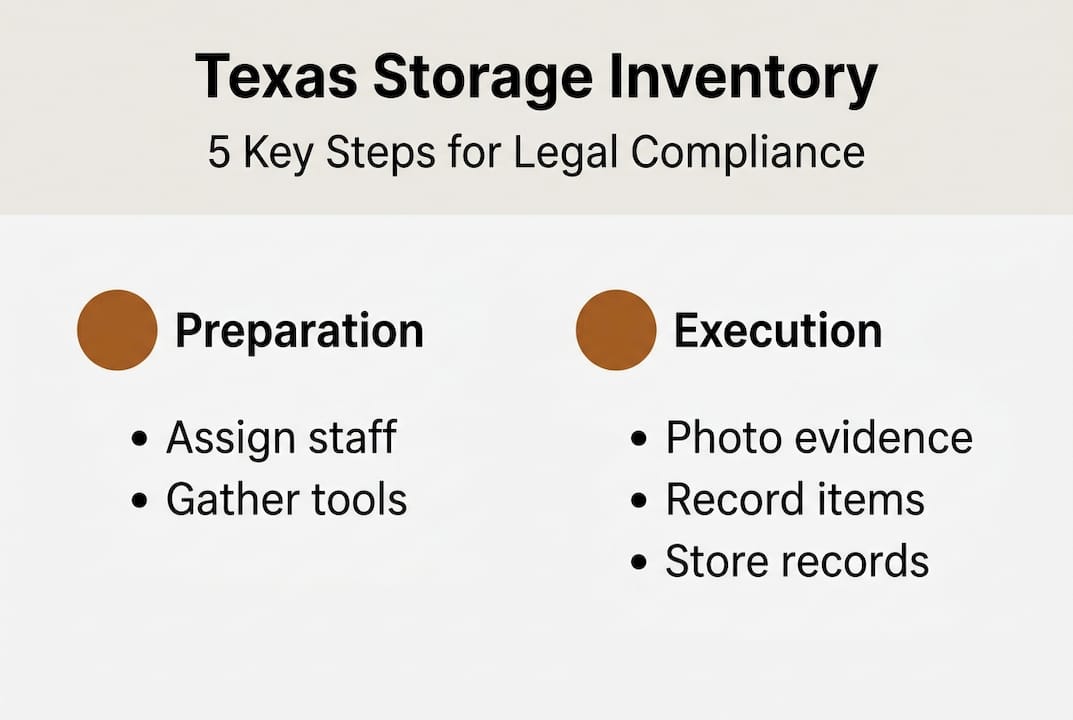
If you're running a facility, assign a specific team member to handle inventories. Consistency matters. One person who knows the process inside and out is more reliable than rotating staff who each do it differently. If you're a tenant trying to document your own unit before a dispute, the same logic applies. Create a system and stick to it.
Organization isn't just about neatness. It directly affects your ability to defend yourself in court or find lost items after auction if something goes missing. A well-organized inventory with clear photos and timestamps is far more credible than a handwritten list with vague descriptions.
Good inventory record-keeping also reduces the time it takes to complete future inventories, because you already have a template and a workflow. That saves money and reduces stress during an already difficult process.
Pro Tip: Take photos and video of the unit before you open any boxes. Capture the overall layout first, then move to individual items. Use a phone that automatically timestamps media, and back everything up to at least two locations immediately after the session.
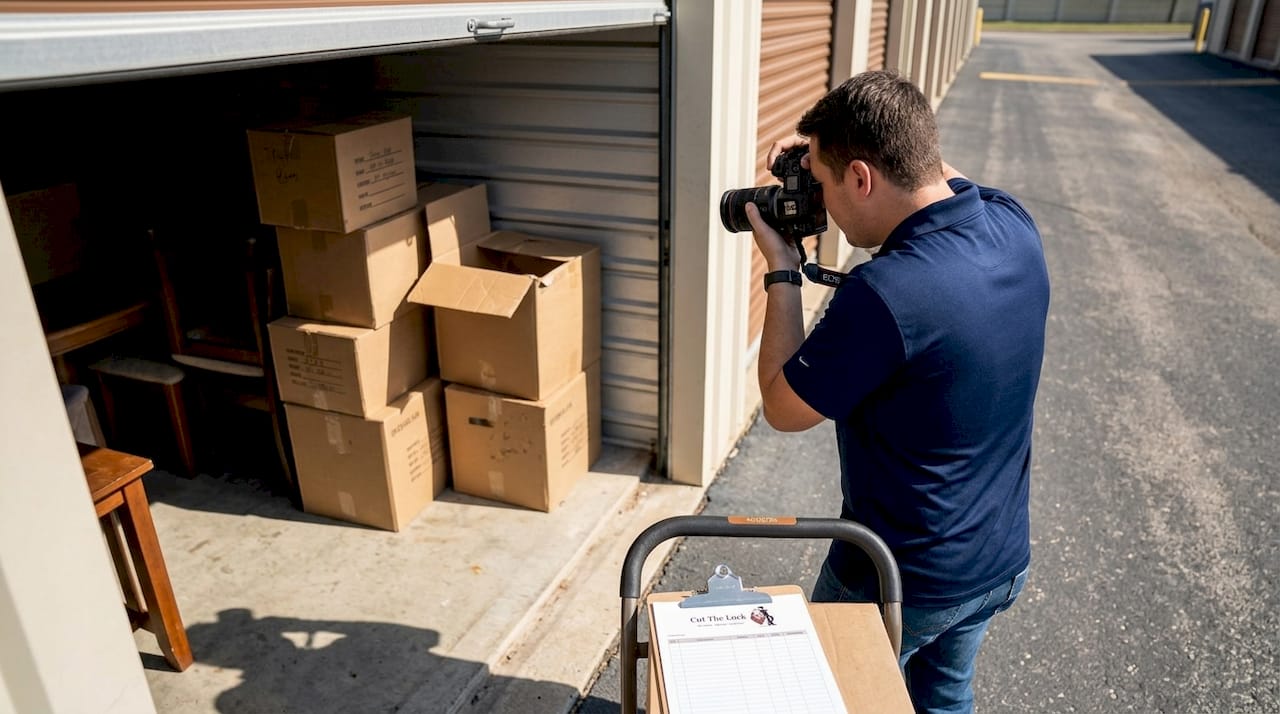
The lien invalidation risk from incomplete inventories is real, and it's one of the most common reasons facility owners lose legal disputes they should have won. Don't let poor preparation be the reason you end up in court.
| Tool | Purpose | Priority |
|---|---|---|
| Timestamped camera | Photo evidence | Critical |
| Inventory sheets | Written record | Critical |
| Numbered labels | Item grouping | High |
| Cloud backup | Redundant storage | High |
| Certified mail supplies | Notice compliance | Critical |
Step-by-step: Conducting a compliant storage inventory in Texas
Preparation complete, it's time to carry out the inventory, step by step. This is where the work happens, and where most mistakes are made.
- Document unit access. Before opening the unit, photograph the lock, the unit number, and the condition of the door. Note the date and time in writing.
- Photograph the interior layout. Take wide shots of the entire unit before touching anything. This establishes the original condition.
- List items by category. Group similar items together: furniture, electronics, clothing, documents, boxes. Write a description for each group, including estimated quantity and visible condition.
- Photograph each group individually. Every category gets its own photo set. For high-value items, take multiple angles and close-ups.
- Handle titled items separately. Vehicles, boats, or trailers require their own documentation. Photograph the VIN or serial number and note any visible damage. Follow photo documentation practices for valuables to ensure nothing is missed.
- Record sensitive or irreplaceable items. Family photos, documents, urns, children's artwork. These need special notation because they carry emotional and legal weight.
- Mail required notices and preserve everything. Send certified notices and keep the tracking receipts. If mail is returned, keep the returned envelope as evidence.
"Incomplete inventories risk lien invalidation and lawsuits; detailed inventory is best practice." Texas Storage Lien Laws
Pro Tip: Check corners, shelves, and areas behind large furniture. Items hidden or stored in non-standard spots are easy to miss and can become the center of a dispute later. Document everything, even if it looks worthless.
If you're a tenant trying to recover belongings, having your own prior inventory makes the process of locating lost belongings much faster and more credible.
Avoiding common mistakes and ensuring legal compliance
Even with good systems, mistakes can happen. Let's review how to avoid the most costly errors.
The most common mistake facility owners make is treating inventory as a formality. It isn't. Incomplete inventories can invalidate a lien entirely, even if every other step was followed correctly. That means the auction proceeds could be clawed back and the facility owner could face a civil lawsuit.
Common mistakes to avoid:
- Skipping photo documentation or using low-quality images
- Failing to send notices by certified mail
- Not accounting for military tenant protections under SCRA
- Missing the required notification steps for vehicles or titled property
- Disposing of items before the legally required holding period ends
- Overcharging for storage fees after a court-ordered eviction, which creates separate legal claim risks
On the tenant side, many people don't realize they have rights even after a lien sale. Excess sale proceeds are held for two years for the tenant, meaning if the auction brought in more than what was owed, you may be entitled to that difference.
| Practice | Poor approach | Best practice |
|---|---|---|
| Documentation | Handwritten list only | Photos, video, written record |
| Notices | Email or verbal | Certified mail with tracking |
| Record retention | Discard after sale | Keep for 4 or more years |
| Titled items | Treat like regular goods | Notify DMV and lienholders |
| Military tenants | Apply standard process | Verify SCRA status first |
Facility owners should also know about post-eviction options for tenants so they can communicate these rights clearly. Doing so reduces disputes and builds goodwill, even in difficult situations.
Keeping records for at least four years isn't just a recommendation. It's a buffer against challenges that can arrive long after the auction date. Courts have seen cases filed years later, and without documentation, the facility owner has no defense.
Why following the rules isn't enough: Real-world lessons from Texas storage auctions
Here's something the legal checklists don't tell you: a technically perfect inventory can still result in a lawsuit, a furious tenant, or a public dispute that damages your facility's reputation. We've seen it happen.
The difference between a smooth process and a nightmare isn't always the paperwork. It's the communication. Facilities that reach out early, explain the process clearly, and give tenants every possible opportunity to reclaim their belongings before auction almost always have better outcomes. Not just legally, but humanly.
The most heartbreaking cases we encounter involve items that were never irreplaceable on paper: a box labeled "misc" that turned out to hold a parent's ashes, or a plastic bin with children's drawings inside. These items had no dollar value in an inventory. But they had everything to someone.
Exceptional documentation has actually helped reunite people with these items, because a thorough inventory made it possible to identify and flag sensitive property before it was sold. That's the real argument for going beyond the bare minimum. Not just legal protection, but the possibility of doing something genuinely good in a hard situation.
The outcomes of storage auctions are rarely clean for anyone involved. But the facilities and tenants who treat the process with care and transparency consistently end up in better positions than those who treat it as a transaction to get through as fast as possible.
Need help recovering lost items or managing your storage inventory?
If you're dealing with a storage situation that's already gone sideways, you don't have to figure it out alone.

Cut The Lock buys abandoned storage units across Texas, catalogs every item inside, and works to reunite original owners with their belongings. Whether you're a facility owner trying to handle a lien sale correctly or a tenant who lost access to a unit and needs help tracking something down, we can help. You can recover lost items directly through our platform, or search our catalog to find auctioned belongings that may have passed through our hands. No one should permanently lose what matters most because of a missed payment.
Frequently asked questions
What does a legally compliant storage facility inventory include in Texas?
A compliant inventory lists each item's description, quantity, and condition, with photographic evidence and documented notice to the tenant. Both written records and visual documentation are required for lien sale compliance.
How long should storage inventory records be kept in Texas?
Keep inventory records and proof of notices for at least four years to protect against legal or tenant challenges that can arise long after the auction date.
What special steps are needed for vehicles or boats in a storage inventory?
You must notify the Texas DMV and all known lienholders and follow title-specific procedures before the vehicle or boat can be included in a lien auction.
Can I recover my lost items after a Texas storage auction?
Sometimes. If the auction generated more than what was owed, excess proceeds are held for two years for the tenant, and some services like Cut The Lock actively work to return personal belongings post-auction.
What happens if the inventory is incomplete during a lien enforcement in Texas?
An incomplete inventory can invalidate the lien entirely and expose the facility owner to civil lawsuits, even if every other part of the process was handled correctly.
Recommended
- Lost Items in Storage Auction? We Can Help | Cut The Lock
- 5 Ways to Find Lost Items After a Storage Auction in Texas | Cut The Lock
- Texas Storage Auction Laws: A Renter's Guide to Getting Your Stuff Back | Cut The Lock
- Lost Items Storage Auction — How to Find Your Belongings | Cut The Lock
- How to Track Inventory Effectively: A Step-by-Step Guide - ORNER