
Most people assume that once a storage unit gets auctioned off, everything inside is gone for good. The contents go to the highest bidder, and the original owner is left with nothing but regret. That picture is not entirely accurate. Federal and state laws actually protect certain categories of belongings, buyers face legal obligations to return personal items, and dedicated recovery services exist specifically to reunite people with the things that matter most. Whether you just lost a unit or you're worried about falling behind on rent, this guide walks you through exactly how the process works and what you can still do.
Table of Contents
- Why storage units become unclaimed and the auction process
- What really happens to your unclaimed belongings
- State-by-state rules and special protections explained
- How to recover sentimental or personal items after auction
- What most people get wrong about unclaimed storage
- Need help getting your items back or connecting with buyers?
- Frequently asked questions
Key Takeaways
| Point | Details |
|---|---|
| Auction timing varies | Storage units are typically auctioned after 45 days of non-payment but state laws and special cases may alter this timeline. |
| Some items must be returned | Auction buyers are legally required to return sentimental, personal, and important legal items to facilities. |
| Recovery is possible | Original owners can often recover key items by contacting facilities and reporting lost property quickly. |
| State rules differ | Protections and procedures change from state to state, especially for military personnel, vehicles, and deceased owners. |
Why storage units become unclaimed and the auction process
Understanding how a unit becomes "unclaimed" is the first step toward knowing what your options are. The process is not overnight, and in most states it requires the facility to follow a strict sequence before a single item is ever sold.
When a tenant misses a payment, the facility typically sends written notices by certified mail and sometimes by email or text. If the balance isn't paid within the notice period, the facility places an overlocking device on the unit, which physically prevents access. At that stage, the tenant is still technically the owner of everything inside. The unit simply becomes inaccessible until the debt is settled.
Each state sets its own minimum waiting period before a facility can legally hold a lien sale. In Kansas, for example, a tenant must be in default over 45 days before an auction can proceed. Other states have similar thresholds, and some are longer. The typical sequence a tenant experiences looks like this:
- Missed payment. The clock starts the day rent is due and unpaid.
- Initial late notice. A written notice is sent, usually within a few days.
- Overlock applied. The facility cuts off access, often around day 14 to 30.
- Certified mail lien notice. A formal legal notice is sent by certified mail to the last known address, detailing the amount owed and auction date.
- Public auction advertisement. Many states require the facility to advertise the upcoming auction in a local newspaper or online marketplace.
- Auction day. The unit is sold to the highest bidder, either in person or via an online auction platform.
Beyond the standard residential tenant, some situations trigger special rules. Active duty military members are protected under federal law, and many states require a court order before a military tenant's unit can be auctioned. Vehicles, boats, and trailers stored in a unit often require additional notice periods, sometimes reaching 60 days or more. If the owner of a unit has passed away, certain states introduce mandatory delays to allow family members or the estate to respond. A proposed bill in New York, for instance, specifically addresses extra waiting periods when a tenant is deceased.
Pro Tip: If you know you're going to miss a payment, contact the facility before you're overlocked. Most managers have more flexibility than the posted rules suggest, and a quick phone call can buy you critical extra time.
To get a clearer picture of what happens after an auction and what auction buyers are actually allowed to do with their purchase, the process has more guardrails than most people expect.
What really happens to your unclaimed belongings
Here's the part that surprises almost everyone. Winning a storage unit bid does not mean the buyer gets to keep everything inside without restriction. The law draws a clear line between items that have resale value and items that are considered personal or sentimental property.
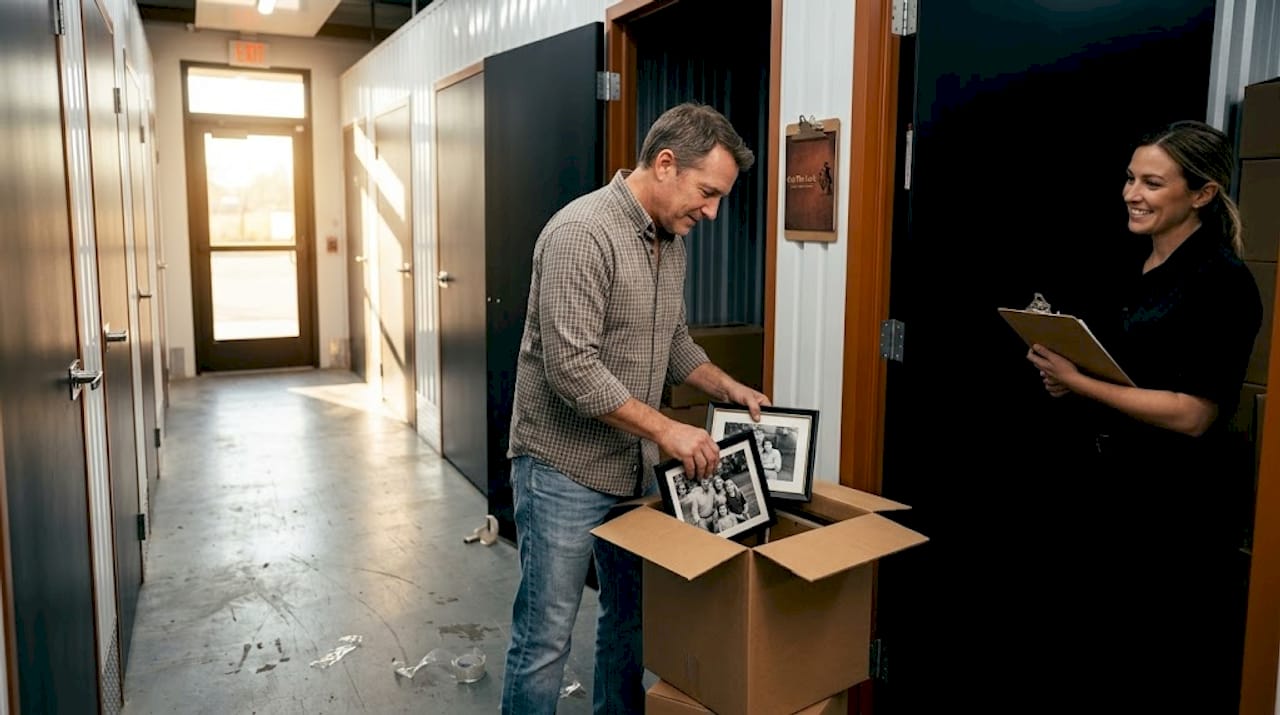
According to auction industry rules, buyers must return personal items including photos, documents, IDs, and birth certificates to the storage facility. The facility is then obligated to make those items available to the original owner. Firearms found in a unit go directly to law enforcement, not to the buyer. Vehicles and boats require separate handling and cannot simply be claimed as personal property by the winning bidder.
"The moment a buyer opens a unit, they take on legal responsibilities that most reality TV shows conveniently edit out. Personal items are not theirs to keep. They never were."
This legal framework matters enormously for anyone trying to recover something irreplaceable. Your grandmother's photo albums, your child's birth certificate, your own military discharge papers — these items should be returned to the facility's lost and found, not sold at a flea market or tossed in a dumpster.
Here's a practical comparison of item categories and what typically happens to each after an auction:
| Item type | Who gets it | What happens next |
|---|---|---|
| Resale goods (furniture, tools) | Auction buyer | Sold or kept by buyer |
| Personal documents (IDs, deeds) | Returned to facility | Available for owner to claim |
| Family photos, personal keepsakes | Returned to facility | Available for owner to claim |
| Firearms and weapons | Law enforcement | Processed per police protocol |
| Vehicles and boats | Special tow/title process | Requires extra legal handling |
| Cash and gift cards | Varies by state | Often returned or deposited |
The reality on the ground is messier. Some buyers follow the rules carefully. Others are less diligent, especially if they bought a unit that turned out to have minimal resale value. Facilities also vary in how aggressively they enforce the return policy. Understanding how lost items auctions work helps you know exactly what to ask for and who is responsible. For a deeper look at realistic outcomes, the guide to finding lost items after auction covers the most common scenarios step by step.
State-by-state rules and special protections explained
There is no single national law governing storage unit auctions. Every state has its own version of what's called a "self-storage lien law," and the differences matter enormously depending on where you live.
The key factors that vary most dramatically from state to state include:
- Minimum default period before a lien can be filed
- Notice requirements including how many notices, by what method, and the required content of those notices
- Advertising requirements for the auction itself
- Special delays for vehicles, boats, and watercraft stored in the unit
- Military member protections including whether a court order is required
- Death of tenant provisions and how long facilities must wait before proceeding
Under state-specific variations, military tenants are among the most protected class of storage users. Many states require facilities to obtain a court order before auctioning a unit belonging to an active duty service member, because military deployment or assignment can make it genuinely impossible for someone to manage financial obligations from overseas.
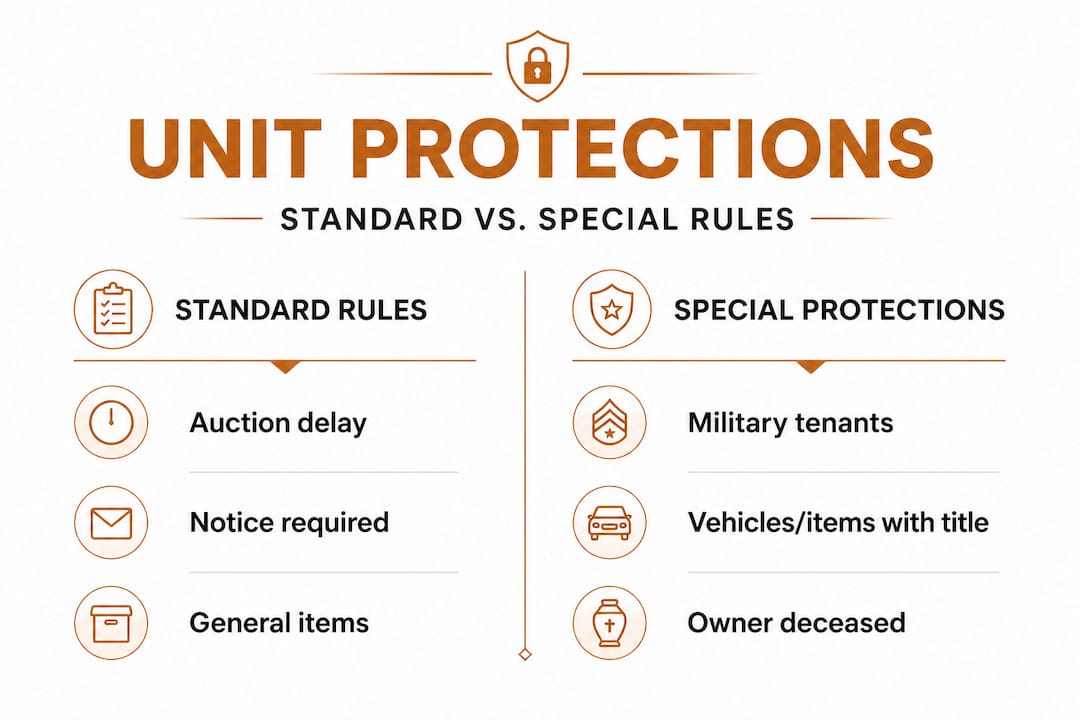
Vehicles, boats, and trailers require extra handling in virtually every state. Because these items have their own title documentation, the standard lien auction process does not automatically transfer ownership. Facilities often need to involve a towing company, notify the DMV, and in some states publish a separate legal notice for the vehicle before it can be sold or disposed of.
Deaths present another layer of complexity. If a unit's owner passes away, states like New York have proposed or passed legislation requiring delays and notice to the estate or next of kin before any auction can proceed. The idea is simple: no one should lose a deceased loved one's belongings simply because paperwork moved faster than grief.
Here's a practical overview of how protections differ for special categories:
| Category | Standard protection | Special requirement |
|---|---|---|
| Active military | Auction delay | Court order often required |
| Deceased owner | Auction delay | Notice to estate/next of kin |
| Vehicle/boat in unit | Separate notice | DMV notification, towing process |
| Standard tenant | 30 to 60 day waiting period | Certified mail notice required |
If you are dealing with a storage situation tied to any of these categories, it is worth reviewing your specific state's self-storage statutes before assuming nothing can be done. Many states have their laws posted online through legislative websites, and legal aid organizations often have plain-language summaries. If you are in Texas, the detailed overview of Texas storage auction laws is a strong place to start.
How to recover sentimental or personal items after auction
If your unit has already been auctioned, the window for recovery is not closed. It's narrower, and it requires you to act quickly and strategically, but real recoveries happen every single week.
Here is a step-by-step action plan:
- Call the storage facility immediately. Ask to speak with the manager, not just a front-desk employee. Explain that you are the former tenant and you want to know what personal items were returned by the buyer. Many facilities keep a simple lost-and-found bin exactly for this purpose.
- Document what you're looking for. Write a specific list of the items you need most urgently. Old family photos, birth certificates, military medals, a loved one's ashes — be specific. Vague requests get vague results.
- Ask for the auction buyer's contact information. Some facilities will provide this. Others won't due to privacy policies. If you can reach the buyer directly, many will cooperate when they understand the emotional context.
- Search online recovery platforms. Sites like Cut The Lock catalog items recovered from auctioned storage units so that original owners can search and reclaim them. This is especially valuable when the facility no longer has the items in house.
- File a formal lost item report. Submitting a report of lost items creates a documented record that connects you to specific belongings if they surface later through secondary sales or resale marketplaces.
- Follow up consistently. One call is rarely enough. Polite, persistent follow-up over several weeks significantly improves your odds. Buyers often sort through unit contents over days or weeks, and items that weren't immediately obvious can surface later.
Because buyers are legally required to return personal and sentimental items to the facility, your requests have legal standing behind them. You are not simply asking for a favor. You are asking for compliance with the law. Frame it that way if needed.
Pro Tip: Bring proof of tenancy to the facility when you go in person. An old lease agreement, a payment receipt, or even a bank statement showing the storage charge gives the manager a concrete reason to take your claim seriously.
Not every item will be recoverable. Some buyers are less careful, and some facilities don't enforce return policies as rigorously as they should. But your chances improve dramatically when you seek help getting your belongings back through channels specifically built for this purpose, rather than simply accepting the loss.
What most people get wrong about unclaimed storage
Here's the uncomfortable truth: the biggest reason people lose their belongings permanently is not because the law failed them. It's because they gave up too quickly or never realized they had options in the first place.
We see this pattern constantly. Someone falls behind on a storage bill during a hard stretch, whether that's a job loss, a medical crisis, or a move that went sideways. The unit gets auctioned. They assume it's over. They don't call the facility. They don't search for recovery platforms. They don't ask whether their photos or documents were set aside. They assume the buyer kept everything and the trail is cold.
That assumption is wrong more often than most people think. Buyers who purchase storage units are typically looking for resale value: furniture, tools, electronics, collectibles. A shoebox of old birthday cards or a folder of medical records holds zero value to them at auction. Many buyers are genuinely glad to return personal items when asked. They didn't want those things in the first place.
The reality we've watched play out through real auction stories is that the storage auction world has more humanity in it than the TV shows suggest. People return items. Facilities hold things. Platforms catalog contents so that searches are possible weeks or months after the fact.
The second biggest mistake is waiting. If you know your unit is at risk or has already been auctioned, every day that passes makes recovery harder. Items get sorted. Secondary sales happen. Contact information gets harder to trace. The moment you know there's a problem is the moment to act.
Need help getting your items back or connecting with buyers?
You've already taken the most important step by learning how the system works. Now let's make sure you know exactly where to go next.

Cut The Lock buys auctioned storage units, catalogs every item inside, and makes those items searchable so that original owners can find and reclaim what's theirs. Whether you're looking for family photos, important documents, or keepsakes with no dollar value but enormous personal meaning, you can find lost belongings through our searchable database right now. If your specific items aren't listed yet, you can report a lost item so we know what to look for. And if you're ready to start the full recovery process, our step-by-step guide to recovering lost items walks you through every option available to you today.
Frequently asked questions
Can I get my sentimental items back after my storage unit is auctioned?
Yes. Buyers must return photos, documents, IDs, and birth certificates to the storage facility, which is then obligated to make them available for the original owner to claim.
How long does a storage facility wait before auctioning my unit?
The waiting period is typically at least 45 days, but it varies by state and is often longer for vehicles, active military members, or cases involving a tenant's death.
What happens to vehicles, firearms, or legal documents found in a storage unit?
Vehicles go through a separate title and towing process, firearms go to law enforcement, and personal documents are supposed to be set aside by the buyer and returned to the facility for the original owner.
Are there extra protections if I'm in the military or if the owner has passed away?
Yes. Military members often require a court order before their unit can be auctioned, and the death of a tenant can trigger mandatory delays to allow the estate or family to respond before a sale proceeds.