
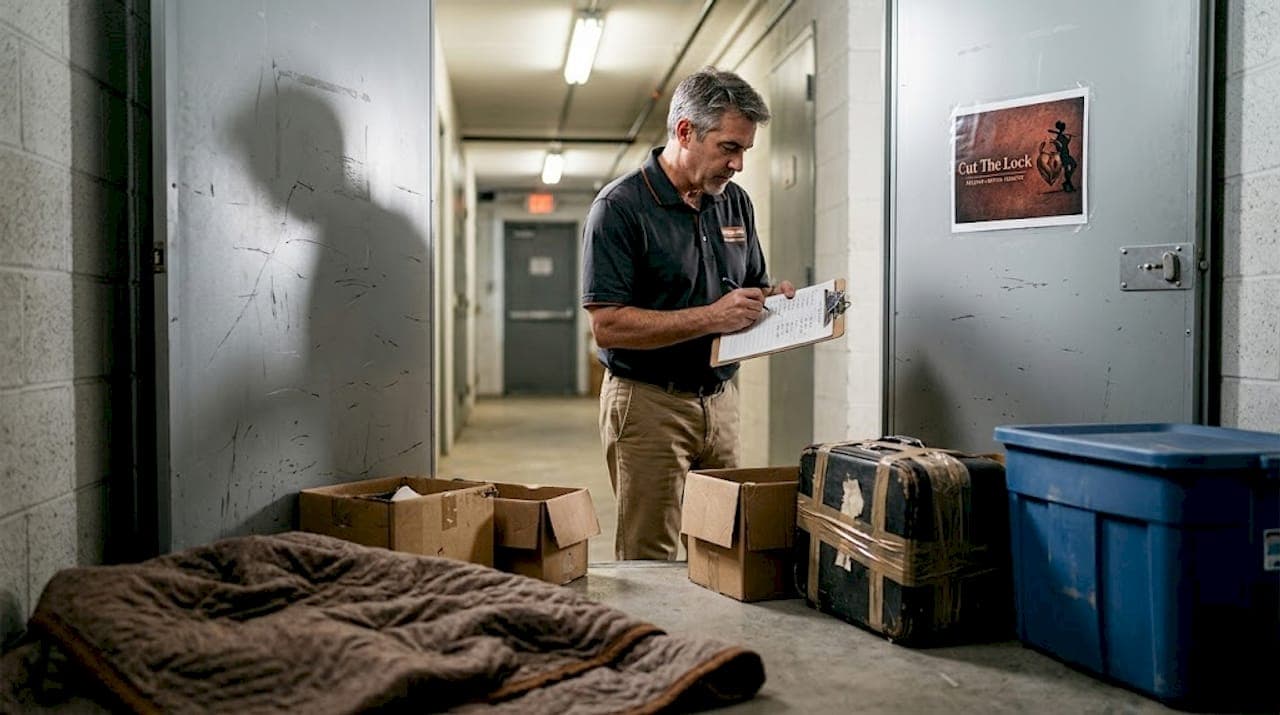
Most people assume that once a storage unit gets auctioned off, their belongings are gone forever. That assumption is wrong, and it costs people their most irreplaceable possessions every year. The reality is that state laws, holding periods, and recovery services create a structured path back to your things, even after an auction has already happened. This guide walks you through exactly how items end up lost, what the auction process looks like from the inside, where the money goes, and most importantly, what you can do right now to get your belongings back. The window is narrow, but it's real.
Table of Contents
- How items become lost or abandoned in storage units
- What actually happens during a storage auction
- What happens to auction money and unclaimed storage items
- Can you get your lost storage items back?
- The reality behind lost storage items: What most guides don't tell you
- Need help recovering lost storage items?
- Frequently asked questions
Key Takeaways
| Point | Details |
|---|---|
| Recovery is possible | You can often reclaim lost or sentimental storage items if you act quickly and follow state processes. |
| Auction proceeds are tracked | Surplus funds from auctions are set aside for owners before reverting to the state as unclaimed property. |
| Every state differs | Laws on storage auctions, notices, and item recovery periods vary widely between states. |
| Specialist help exists | Platforms and experts can boost your chances to find and recover lost storage items after an auction. |
How items become lost or abandoned in storage units
The most common reason items end up lost is simple: a missed payment. When a renter falls behind on their monthly fee, the storage facility typically locks the unit, issues a formal notice, and begins a legally required waiting period before they can auction the contents. This is not a quick process. Most states require a 30 to 60 day delinquency period before items are legally considered for auction, giving renters real time to respond.
But missed payments aren't the only story. Some units are abandoned by accident. Renters move across the country, paperwork gets lost in the chaos, or a family member stored items under their own name and passed away without telling anyone. These situations leave items in legal limbo, not because anyone was careless, but because life gets complicated.
Here are the most common ways storage items become lost or subject to auction:
- Missed or stopped payments with no response to the facility's notices
- Owner relocation without updating contact information
- Death of the account holder without estate communication to the facility
- Paperwork mix-ups during moves or contract renewals
- Accidental unit abandonment during disputes or medical emergencies
One important nuance: laws vary significantly by state. For example, Kansas defaults to 45 days before items can be auctioned, while Missouri updated its rules in 2026 to allow online auctions, changing how and when former tenants can even find out a sale happened. Vehicles stored in units face an extra risk: they can be towed before the unit itself is auctioned, sometimes as early as 60 days into nonpayment.
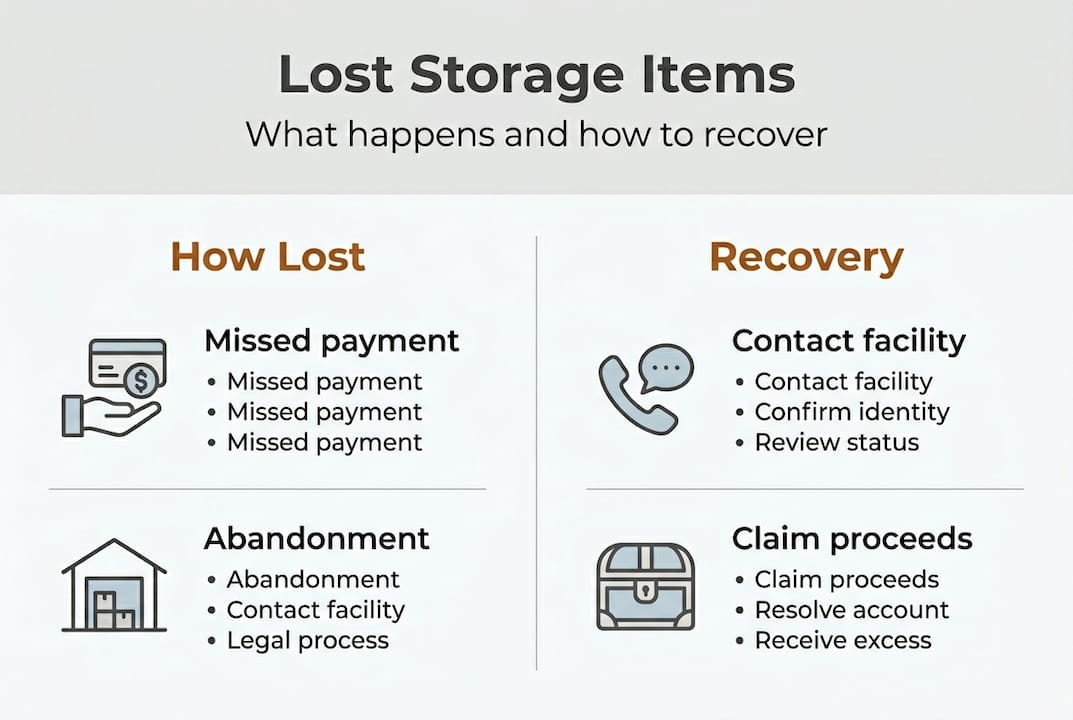
Understanding how items get lost in the first place is the first step toward knowing how to get them back.
What actually happens during a storage auction
Understanding how items get lost helps make sense of what happens at the next stage: the auction itself. The process is more structured than most people imagine, and that structure creates opportunities for former owners.
Here's how a typical storage auction unfolds:
- Notice period begins. The facility sends a formal default notice via mail or email, sometimes both, to the address on file.
- Legal waiting period. State law requires a minimum number of days before any auction can occur, typically 30 to 60 days.
- Auction is listed. The facility works with a licensed auction company, often posting online through platforms like StorageTreasures or AuctionZip.
- Unit is viewed. Bidders get a brief look at the unit's contents, but cannot enter or handle items before bidding.
- Auction closes. The highest bidder wins the entire unit, contents and all.
- Proceeds are distributed. Money covers unpaid rent and fees first, with any surplus held for the original owner.
Comparing how facilities handle auctions versus direct disposal matters here:
| Method | Notice required | Owner can reclaim? | Timeline |
|---|---|---|---|
| Formal auction | Yes | Yes, before and sometimes after | 30 to 60 days minimum |
| Direct disposal | Varies by state | Rarely | Often shorter |
| Donation | Varies | Rarely | Depends on facility |
The auction proceeds must first cover any unpaid rent and fees before anything is returned to the former owner. Surplus funds are held, sometimes for up to one year, before escheating to the state as unclaimed property.

If you missed the notice or weren't aware of the auction, your first call should be to the facility to ask which auction company handled the sale. That company may still have records of the buyer and what was sold. Finding belongings after an auction starts with that paper trail.
What happens to auction money and unclaimed storage items
Once the auction is over, many people wonder where both the items and money actually end up. The answer depends on timing, state law, and how much was left over after unpaid bills were settled.
Here's how the money flows after a storage auction:
| Distribution stage | Who receives it | Timing |
|---|---|---|
| Unpaid rent and fees | Storage facility | Immediately from proceeds |
| Auction company commission | Auction company | Immediately from proceeds |
| Surplus funds | Original owner | Held for a set period (often 1 year) |
| Unclaimed surplus | State government | After holding period expires |
The surplus funds are held specifically for the original owner, but only if they come forward. If no one claims the money within the state's holding window, typically up to one year, it becomes unclaimed property under state control.
For items themselves, the buyer who won the auction legally owns everything in the unit. What they do next is up to them: some resell pieces individually, some donate items, and some simply discard what they can't sell. There's no legal requirement for auction winners to notify original owners, which is exactly why recovery services that catalog and publicize unit contents are so valuable.
Pro Tip: Visit your state's official unclaimed property database. If your storage unit was auctioned and produced a surplus, that money may already be sitting there under your name, waiting to be claimed.
If you believe money is owed to you, claiming surplus proceeds is a concrete legal option worth pursuing before the holding period expires. And if you're trying to track down physical items, reporting missing items early increases your chances significantly.
Can you get your lost storage items back?
Knowing what happens to the items and money is important, but most people really want to know if it's even possible to get their things back. The answer is yes, but only if you move fast.
Here's a step-by-step approach to recovering lost storage items:
- Call the storage facility immediately. Ask for the name of the auction company, the auction date, and whether any buyer information is available. Facilities aren't always required to share buyer details, but many will.
- Contact the auction company. They may have records of who bought the unit and whether specific items were cataloged before sale.
- Search online auction platforms. Sites like StorageTreasures sometimes list individual items from storage units for resale. Search for distinctive items by description.
- Check recovery platforms. Specialized services catalog unit contents and actively try to match items with former owners, especially sentimental ones.
- File an official report. Document what was in the unit with as much detail as possible, including photos if you have them.
Some states allow original owners to reclaim their property within a fixed window after the auction, specifically if the buyer has not yet resold or disposed of items. The owner can reclaim items up to the amount paid at auction in certain circumstances, though this varies by state and case.
Pro Tip: Document your ownership clearly before you make any calls. Photos, receipts, serial numbers, or even family photos featuring specific items dramatically strengthen your position when talking to facilities, buyers, or recovery services.
If you are trying to find lost storage items on your own, persistence matters more than legal threats. And if you're ready to take formal action, you can file a lost item report to get the process officially started.
The reality behind lost storage items: What most guides don't tell you
Here's the uncomfortable truth we've learned from seeing hundreds of storage recoveries up close: the system isn't built to protect your sentimental items. It's built to protect the storage facility's revenue. The notice periods, the auction timelines, the unclaimed property rules — all of it exists because of financial law, not because someone cares about your grandmother's jewelry.
Most people make one critical mistake: they ignore early warning signs. A missed payment feels manageable in the moment, but that first default notice starts a clock that doesn't pause. By the time someone realizes their unit is gone, the auction has already happened.
Here's the part most guides skip entirely: you have more leverage than you think, but only in the early stages. Waiting and hoping the law will protect you is the single worst strategy. Acting within the first few days of hearing about an auction, even after the fact, gives you a real shot. Reclaiming lost property is rarely automatic, but it almost always rewards the person who shows up first, asks the right questions, and keeps a paper trail.
Building documentation and staying persistent wins far more recoveries than any legal threat ever will.
Need help recovering lost storage items?
If reading this has made you realize you're already in the middle of this process, you don't have to navigate it alone. Cut The Lock was built specifically for moments like this.

We buy abandoned storage units, catalog every single item inside, and actively work to find your lost items and return them to the people they belong to. Family photos, urns, children's artwork, military medals — these are the things we look for first, because we know what they mean. If you've lost access to a unit, you can recover lost storage items through our platform or report a lost item so our team knows exactly what to look for. One conversation could be the difference between losing something forever and getting it back.
Frequently asked questions
How long do I have to reclaim storage auction proceeds or lost items?
You typically have up to one year to claim surplus auction proceeds before the funds are transferred to the state as unclaimed property. After that point, you'll need to file a claim with your state's unclaimed property program.
What happens if my vehicle is left in a storage unit?
Most states allow the facility to arrange towing after 45 to 60 days of nonpayment, though the exact timeline depends on your state's specific statutes. Vehicles face a faster timeline than household goods, so contact your facility immediately if you're behind on payments.
Is it possible to recover sentimental items after an auction?
Yes, recovery is possible, but speed is everything. Contacting the facility, the auction company, or a specialized recovery platform within days of learning about the auction gives you the best chance of getting irreplaceable items back.
What happens to items that aren't sold at auction?
Unsold items may be disposed of, donated, or resold through secondary channels at the buyer's discretion. There is no universal legal requirement for buyers to preserve or publicize unsold items, which is why cataloging services matter so much.
Recommended
- Lost Items Storage Auction — How to Find Your Belongings | Cut The Lock
- Lost Items in Storage Auction? We Can Help | Cut The Lock
- 5 Ways to Find Lost Items After a Storage Auction in Texas | Cut The Lock
- What Happens to Your Stuff When a Storage Unit is Auctioned? | Cut The Lock
- The Art of Storing Clothes Properly | Laundry Tips