
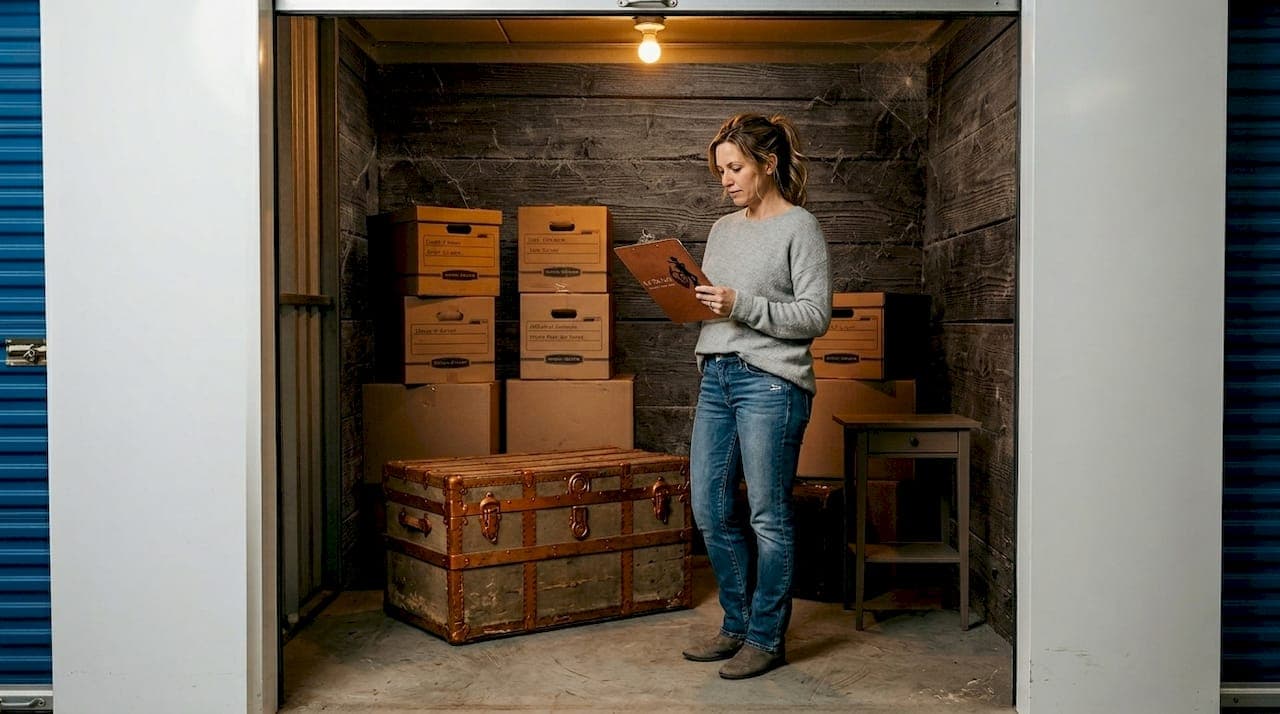
You open a box expecting your grandmother's letters, your child's first drawings, the urn holding your father's ashes — and they're gone. Not misplaced. Gone, because a storage unit you fell behind on was auctioned off while you were fighting to keep the lights on. It's one of the most gut-wrenching losses a person can face, and it happens more often than most people realize. The good news is that recovery is often possible, but the window is narrow and the steps matter enormously. This guide walks you through exactly what to do, from day one to last resort.
Table of Contents
- Understand what happens when a storage unit is abandoned
- Gather proof of ownership and sentimental value
- Take action during the redemption period
- Negotiating with bidders and the facility after auction
- What to do if your items can't be recovered
- What most guides miss about recovering sentimental storage items
- Need help recovering lost storage items?
- Frequently asked questions
Key Takeaways
| Point | Details |
|---|---|
| Redeem during window | You often have a limited redemption period—act fast to recover your items before your unit is auctioned. |
| Document ownership | Gathering proof and demonstrating sentimental value raises your chance of successful negotiation. |
| Contact buyers quickly | After auction, reaching out to buyers fast may help recover sentimental items through goodwill. |
| Claim surplus funds | If your items are lost, you can often claim any auction proceeds that exceed your debt. |
| Professional help exists | Specialized services and ethical buyers may boost your chances of reuniting with precious belongings. |
Understand what happens when a storage unit is abandoned
Before you can recover anything, you need to understand the machine you're up against. Storage facilities don't auction units out of spite. They follow a legal process governed by state lien laws, and that process actually creates several windows where you can act.
Here's the general sequence:
- You miss a payment and the facility sends a default notice
- A lien is filed against your property after a waiting period (usually 14 to 30 days)
- The facility is legally required to notify you by certified mail and, in many states, by email or phone
- A public auction is advertised, often online through platforms like StorageTreasures
- The unit is sold to the highest bidder
The critical window you need to know about is called the redemption period. This is your legal right to pay off what you owe and stop the auction. According to the storage auction process, this period typically runs 14 to 90 days after your default notice, depending on the state where the facility is located.
"The primary method to recover items is to pay the full outstanding balance — rent, late fees, and any auction costs — before the auction completes. The redemption period typically runs 14 to 90 days after a default notice, and it varies significantly by state."
Why does this matter for sentimental items specifically? Because some states and facilities have provisions that treat personal documents differently. Passports, birth certificates, and similar items may be flagged for separate handling even after an auction concludes.
Pro Tip: Check your original rental agreement. Many facilities include language about how they handle personal documents, which may give you an additional legal foothold if the unit has already been sold.
The impact of state law on your recovery chances is significant. Texas, California, and Florida each have different lien laws with different timelines and notice requirements. Knowing your state's rules tells you exactly how much time you have and what fees you'll owe.
Gather proof of ownership and sentimental value
Once you understand the basics, getting the right documentation together gives you a real advantage, whether you're trying to redeem your unit, negotiate with a buyer, or appeal to the facility manager's humanity.
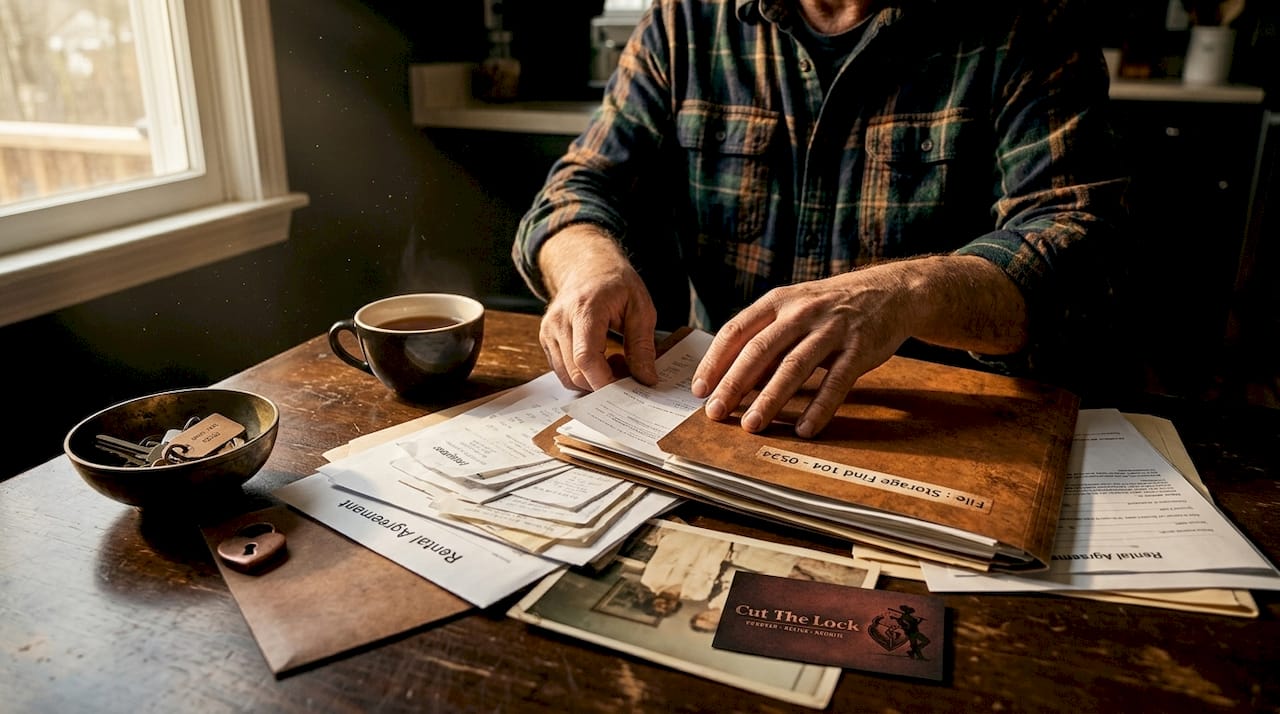
Start collecting the following immediately:
- Rental agreement or lease: Proves you were the original tenant
- Payment receipts or bank statements: Shows your history of paying and the point at which payments lapsed
- Government-issued ID: Required for any formal redemption
- Photos of items: If you have photos of specific belongings still inside the unit, these are powerful during negotiation
- Written list of sentimental items: A specific list (grandmother's quilt, child's baby photos, cremation urn) helps both you and any buyer understand what matters most
Here's a simple breakdown of how different evidence types help in different situations:
| Evidence Type | Helps With Redemption | Helps With Buyer Negotiation | Helps With Legal Claims |
|---|---|---|---|
| Rental agreement | Yes | Somewhat | Yes |
| Photo of items | No | Strongly | Somewhat |
| Payment receipts | Yes | No | Yes |
| Written item list | No | Strongly | Somewhat |
| Government ID | Yes | No | Yes |
The ethical angle here is worth emphasizing. Personal and sentimental items like photos, documents, passports, and birth certificates are often required or strongly encouraged to be returned by the buyer to the facility for the original owner. Many buyers comply simply because they're decent people who didn't bid on someone's memories. When you're finding your lost belongings, a calm, specific, and human appeal often works better than a legal threat.
The key to recovering items successfully is being prepared before you make contact. Showing up with documentation signals that you're serious, organized, and legitimate. It also makes it easier for staff or buyers to help you without creating additional risk for themselves.
Take action during the redemption period
Armed with proof, it's time to act quickly. Speed is your most valuable asset here. Every day you wait is a day closer to the auction completing and your legal window closing.
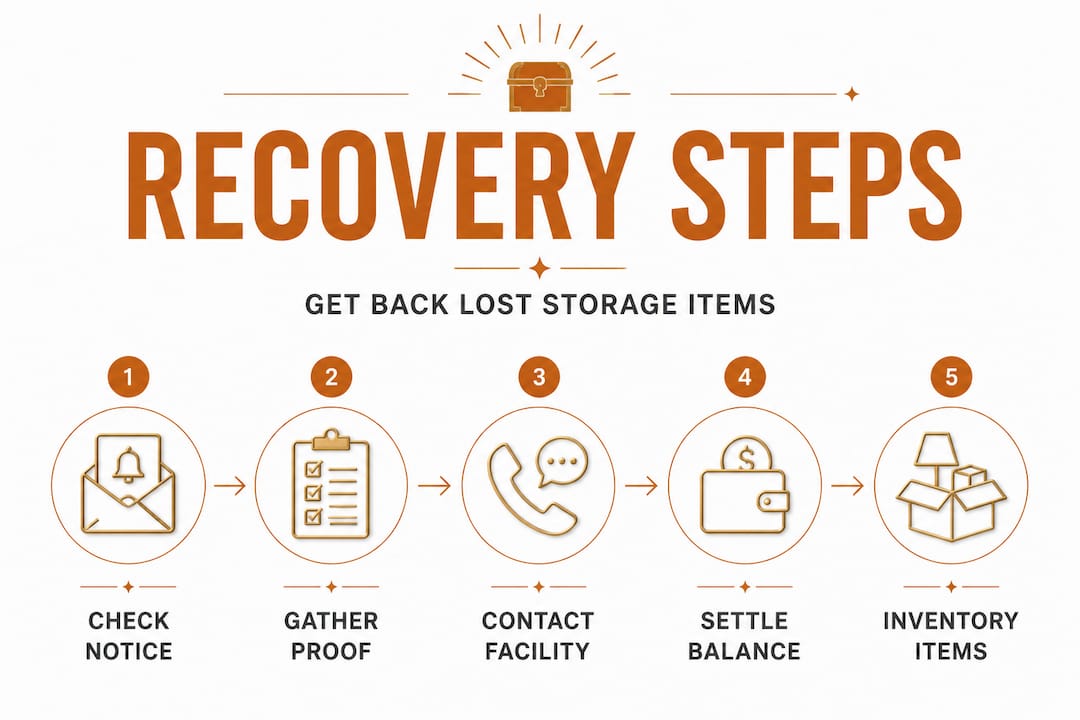
Follow these steps in order:
- Call the facility immediately. Ask specifically whether the redemption period is still open. Don't assume. Get a name and write it down.
- Ask for a written total of all fees owed. This includes past-due rent, late fees, lien filing fees, and any auction preparation costs.
- Confirm payment methods accepted. Some facilities only accept cash or money orders for redemption. Showing up with a credit card when they need a cashier's check wastes precious hours.
- Get confirmation in writing. Once you've paid, request a written receipt that confirms the unit has been removed from auction and access has been restored.
- Show up in person if possible. Phone calls can be ignored or mishandled. Physical presence adds urgency and accountability.
For a detailed walkthrough, the step-by-step recovery process covers each stage with specific language to use when talking to facility staff.
A common mistake people make is assuming they only owe the back rent. In reality, by the time a unit reaches auction, you typically owe rent, late fees, lien filing costs, and any advertising fees the facility paid to list the auction. That total can be significantly higher than expected. Ask for the exact figure before you try to pay.
Pro Tip: If you can't pay the full amount at once, ask whether the facility will accept a partial payment to pause the auction. Some facilities have discretion here, especially if you've been a long-term tenant. It's not guaranteed, but it's worth asking directly before assuming the answer is no.
Once you've settled the balance and get your stuff back, do a full inventory of the unit before leaving the facility. Document any missing items with photos and report them to management immediately while you're still on site.
Negotiating with bidders and the facility after auction
If the auction has already closed before you could act, all is not lost. But this is where the odds shift, and you need to be strategic.
Here's what to do right away:
- Contact the facility within 24 hours of learning about the auction. Buyers typically have 24 to 48 hours to empty the unit, which means the contents may still be physically accessible.
- Ask the facility manager for the buyer's contact information. Not all facilities will provide this, but many will pass along your information to the buyer on your behalf.
- Write a short, specific, human message to the buyer. Don't lead with legal threats. Lead with specifics: "I'm the original owner. I'm looking for my son's baby album and my mother's ashes. These items have no resale value. Would you be willing to return them?"
- Offer compensation. Offering $50 to $100 to cover the buyer's time signals good faith and increases the likelihood of a positive response.
- Follow up once, politely. One follow-up is acceptable. Harassment will shut the door permanently.
Post-auction recovery relies almost entirely on buyer goodwill. Anecdotal reports suggest some people do negotiate returns successfully, but the odds are low without a willing buyer. Your tone and specificity are your best tools.
Understanding how working with ethical buyers actually works can shift your approach dramatically. Experienced buyers know that personal documents and family mementos have zero resale value. They're often relieved to return them because it simplifies their cleanup process and feels like the right thing to do.
Pro Tip: Post a clear, respectful notice on community boards or local Facebook groups describing the specific items you're looking for. Use tips to locate your items to cover more ground. Buyers sometimes check these boards, and the community around storage auctions is smaller than you'd think.
What to do if your items can't be recovered
In the event your search is unsuccessful, you still have two meaningful avenues: financial recourse and emotional closure.
Financial recourse through surplus funds
Storage auctions sometimes generate more money than the tenant actually owed. When that happens, the original owner is entitled to the surplus. You can claim it through a certified letter to the facility or, if they refuse, through small claims court. In some states, you have up to two years to make this claim.
Steps to claim surplus funds:
- Request an itemized statement from the facility showing total auction proceeds and total debt
- Calculate the difference (auction proceeds minus what you owed)
- Send a certified letter demanding payment of any surplus
- If the facility refuses, file in small claims court with your documentation
| Situation | Your Option | Timeline |
|---|---|---|
| Auction proceeds exceeded debt | Claim surplus funds | Up to 2 years in some states |
| Facility mishandled notification | Consult an attorney | Varies by state |
| Items lost due to facility error | Small claims or civil suit | Varies by state |
| No surplus, items gone | Seek emotional closure | No legal timeline |
Emotional recovery matters too
This part often gets ignored in legal guides, and it shouldn't. Losing irreplaceable items, like a parent's handwritten letters or a child's first drawings, is a real grief. Giving yourself permission to mourn that loss, rather than simply moving on, is part of the process.
For additional support on other recovery options and understanding what happens to lost storage items, there are resources specifically designed for former tenants navigating this exact situation.
What most guides miss about recovering sentimental storage items
Most guides focus entirely on the legal process, and that's useful. But the legal process is only half the picture. The other half is purely human, and it's often what actually determines whether you get your things back.
Here's what we've seen repeatedly: the people who recover their sentimental items after a storage auction are almost never the ones who showed up with lawyers. They're the ones who called within 48 hours, spoke calmly and specifically about what they were looking for, and treated the buyer or facility staff like a person rather than an obstacle. That approach works because buyers are people too. They didn't set out to take someone's family photos. Most of them feel awkward about it.
There's also something worth saying about closure that most recovery guides completely skip. Sometimes items are genuinely gone. They've been discarded, resold, or separated from the rest of the unit's contents. When that's the case, the most healing thing you can do isn't to exhaust yourself in an impossible search. It's to acknowledge what was lost, honor its significance in your life, and give yourself permission to grieve. That's not giving up. That's emotional maturity.
The real examples from Austin show exactly this dynamic in action: people who reached out with honesty and respect, sometimes weeks after an auction, and still managed to recover what mattered most to them. The legal window may have closed. The human window rarely does.
We'll be direct: the conventional wisdom that "once it's auctioned, it's gone" is simply not true in many cases. Persistence, done respectfully and specifically, changes outcomes more often than most people expect.
Need help recovering lost storage items?
Recovering belongings from an auctioned storage unit is exhausting work, especially when you're already dealing with financial stress. You shouldn't have to do it alone.

Cut The Lock was built specifically for situations like yours. We buy abandoned storage units, catalog every item inside, and actively work to reconnect original owners with the belongings that matter most. Our professional recovery services are designed to increase your chances of recovery by putting experts in your corner from the very beginning. If you're searching for specific items, browse our current listings or explore the options for former tenants to see how we can help. One person's worst day doesn't have to be permanent, and we mean that.
Frequently asked questions
How long do I have to recover my storage unit before it's auctioned?
You typically have 14 to 90 days after your default notice, depending on your state's lien laws and the specific facility's redemption period policy.
Will bidders always return personal documents or photos to me?
Most bidders return sentimental items like photos and documents out of personal ethics, but it's not legally guaranteed unless your facility specifically requires it as part of auction terms.
What if my items are already gone after the auction?
Contact the facility and buyer immediately, since buyers typically have 24 to 48 hours to empty the unit; if recovery fails, you may pursue surplus funds or closure through the steps outlined above.
How do I claim any leftover money from my unit's auction?
If auction proceeds exceeded your debt, you're entitled to the surplus and can claim it via certified letter or small claims court, often within a window of up to two years depending on your state.