
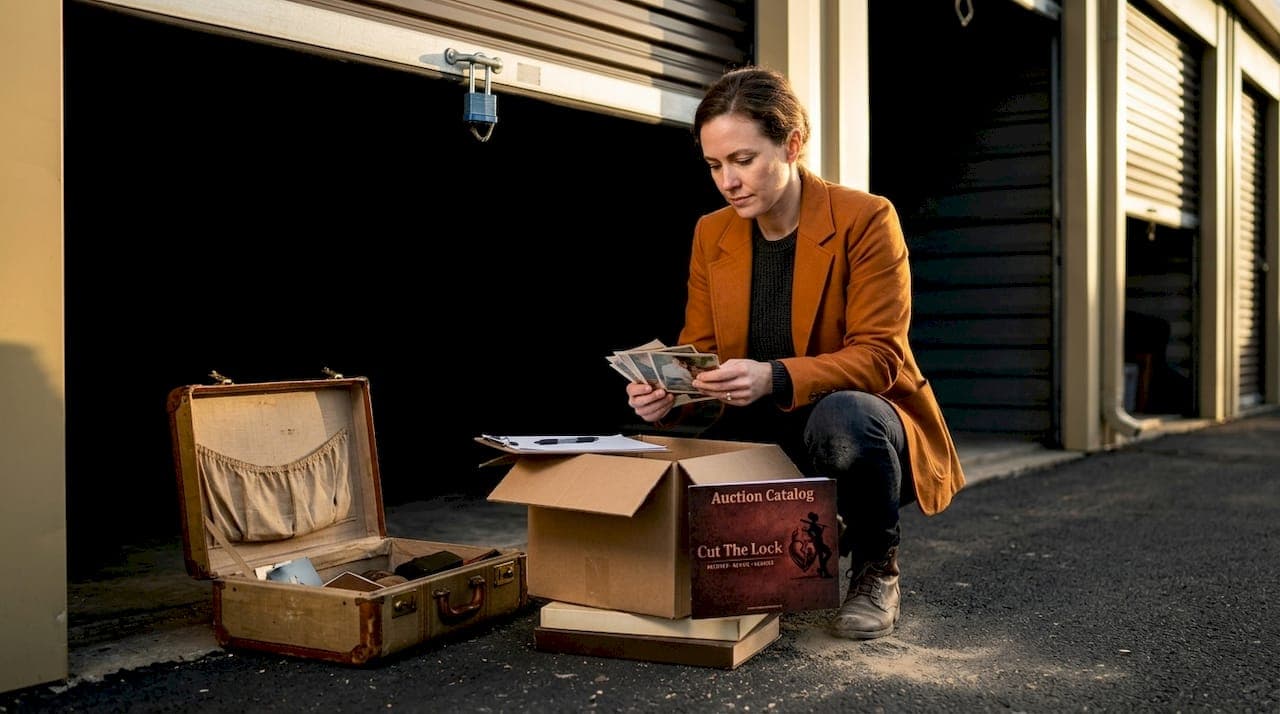
Picture this: you missed a few months of storage payments during a rough patch, and by the time you sorted things out, the facility had already auctioned off your unit. Your mother's jewelry, your kids' baby photos, the folded flag from your grandfather's funeral — gone. Not destroyed, just somewhere out there in someone else's hands. If that scenario hits close to home, you're not alone, and more importantly, you're not out of options. This guide walks you through how storage auctions work, what buyers need to succeed, and exactly how former tenants can fight to get the things that matter most back where they belong.
Table of Contents
- Understanding storage auctions and your rights
- What you need before you bid: tools, research, and requirements
- The storage auction process: step-by-step walkthrough
- How to recover sentimental items after an auction
- Common mistakes and troubleshooting tips
- Why real success with storage auctions means focusing on people, not just profit
- Take the next step: Connect with Cut The Lock
- Frequently asked questions
Key Takeaways
| Point | Details |
|---|---|
| Know your rights | Understanding local laws and auction procedures is essential before participating or seeking recovery. |
| Prepare thoroughly | Assemble your tools, paperwork, and research to bid confidently and avoid mistakes. |
| Act ethically | Returning sentimental items is common and builds trust, even though not legally required everywhere. |
| Start small | Begin with manageable bids and learn the ropes to minimize risk and maximize positive outcomes. |
| Support is available | Professional recovery services and ethical buyer communities can help both buyers and original owners. |
Understanding storage auctions and your rights
To prepare for auctions or attempt to reclaim belongings, it's crucial to first understand the underlying process and the rights of both buyers and original owners.
Storage auctions happen when a tenant falls behind on rent and the facility exercises its legal right to sell the unit's contents. It's not immediate. Facilities must follow a formal process that usually includes written notices, late fees, a mandatory waiting period, and in many states, a public advertisement of the impending sale. These notice periods range widely by state, from as few as 14 days to as many as 90, which means the window for a tenant to intervene before a sale varies dramatically depending on where you live.
Understanding local lien laws is essential whether you're a buyer or a former tenant. State lien laws govern what a facility can legally sell, under what conditions, and what rights tenants retain even after the auction. Some states require auctions to take place in person. Others permit entirely online sales through platforms like StorageTreasures or Bid13.
Here are the key terms every participant should understand before stepping into the auction process:
- Lien sale: The legal process a storage facility uses to sell a tenant's belongings to recover unpaid rent.
- Default: When a tenant stops paying and the account becomes delinquent.
- Notice period: The legally required waiting time between the facility declaring default and actually holding the auction.
- Reserve price: A minimum bid amount sometimes set by the facility.
- As-is sale: A standard auction condition meaning no warranties, no returns, and no recourse for the buyer.
"The ethical standard in the storage auction community, even without a universal legal requirement, is to return personal documents, family photos, and sentimental heirlooms to original owners when possible." Public Storage Auction Process
This ethical norm matters. Buyers who want to buy storage units safely and build a good reputation in the community treat personal items with respect. And for former tenants, it means there's real hope even after a sale. Understanding the auction terms for buyers before you engage sets you up to navigate the system instead of being surprised by it.
What you need before you bid: tools, research, and requirements
With a foundation in auction rules, the next step is to prepare with the right tools and knowledge for your first or next auction.
Walking into a storage auction unprepared is one of the fastest ways to lose money or miss opportunities. The difference between a buyer who makes consistent returns and one who gets burned usually comes down to preparation, not luck.
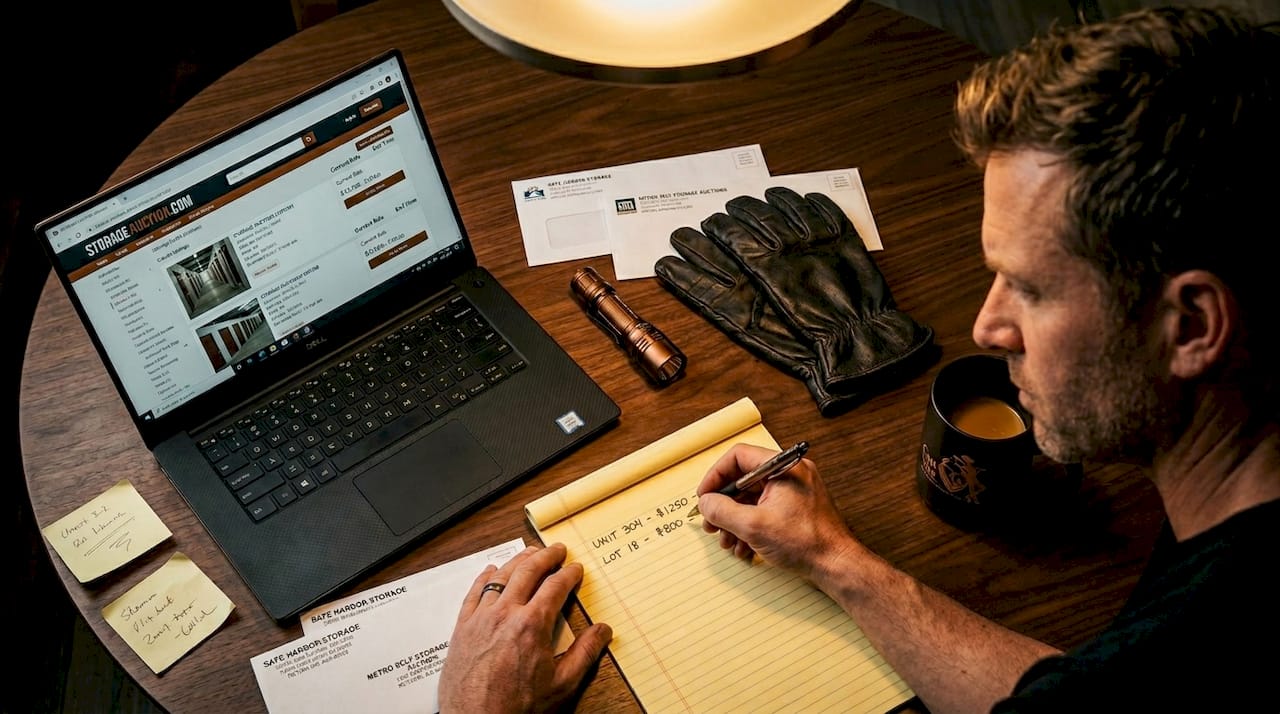
Required documents and essentials
Most auctions require:
- Government-issued photo ID for registration
- Cash or a pre-authorized payment method (many facilities require immediate payment upon winning)
- A deposit in some cases, which may be required before bidding
- Signed registration forms agreeing to the facility's terms and conditions
Gear that separates smart buyers from first-timers
| Tool | Why you need it |
|---|---|
| Flashlight | Units are often dimly lit; you need to see to the back |
| Work gloves | Protecting your hands while sorting through unknown items |
| A new padlock | You'll need one the moment you win and take ownership |
| Inventory sheets | Tracking every item methodically pays off at resale |
| Measuring tape | For estimating furniture dimensions and hauling logistics |
| Trash bags | Cleanup is mandatory; you must remove all contents |
Smart strategy before auction day
Research is the most underrated part of the process. Visit the facility beforehand if possible. Read recent auction reviews online. Talk to experienced buyers in local Facebook groups or forums. Know the going rates for furniture, electronics, tools, and collectibles in your area before you bid on anything.
Success in auctions is built on discipline: visible value beats a hidden gamble every time. Starting small keeps losses manageable while you're learning. Check the storage unit buying checklist before committing to anything.
Pro Tip: Don't judge a unit by its front row. Buyers who rush to bid based on a glimpse of one appliance or a branded box often overpay. Scan the whole visible space, estimate realistically, then set your hard maximum before the auction starts.
There are also several auction myths debunked that could cost you money if you believe them going in. The biggest one? That every unit contains hidden treasure. Most units are ordinary, and profitability comes from volume, research, and smart resale networks, not a single lucky find.
The storage auction process: step-by-step walkthrough
With your materials and strategy in place, you're ready to navigate the live auction process with confidence.
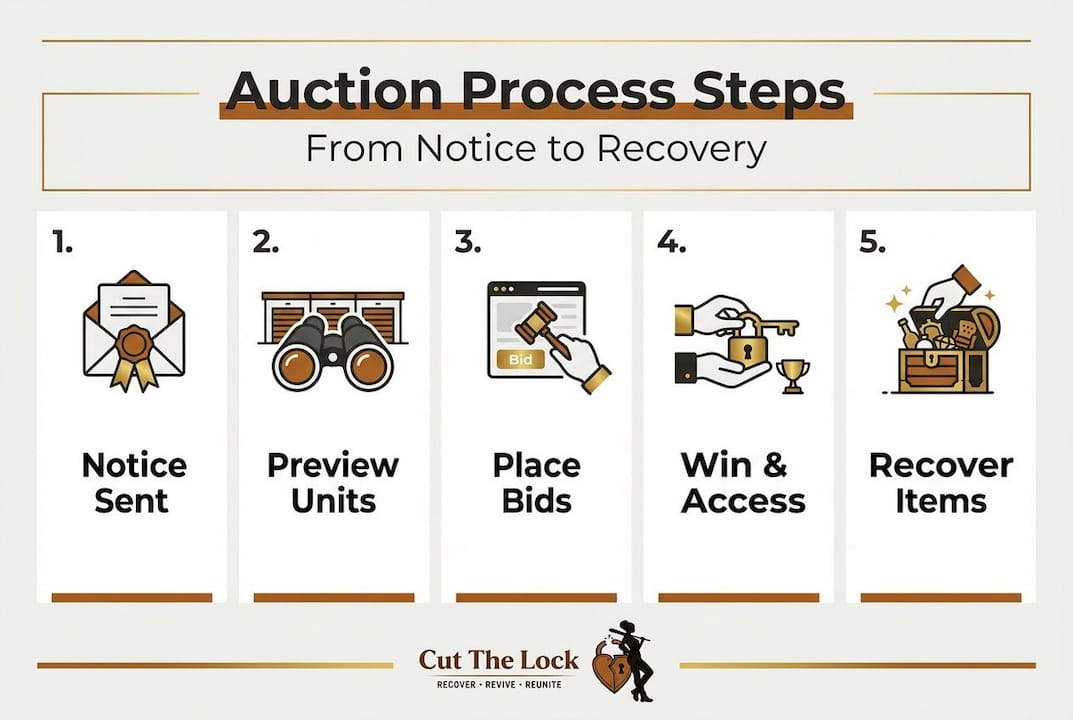
Whether you're attending in person or bidding online, the process follows a consistent rhythm. Here's how it typically unfolds:
- Find the auction. Use platforms like StorageTreasures, Bid13, or the facility's own website. Many facilities post upcoming auction dates through county legal notices as well.
- Register as a bidder. Online platforms require account creation and sometimes a deposit. In-person auctions require showing up early, presenting your ID, and signing a registration form.
- Preview the unit. You usually get a brief look at the open unit without entering it. No touching allowed. This is your only chance to assess what's inside.
- Place your bids strategically. Set a hard ceiling before the auction starts and do not exceed it. Adrenaline and competition make it easy to overbid.
- Win and pay immediately. Most facilities require same-day payment in cash or approved methods. Delays can void your win.
- Take ownership and start inventorying. Once you pay, the unit is yours. Start with a thorough walkthrough and document everything before you move a single item.
- Complete cleanup within the deadline. Facilities typically give buyers 24 to 72 hours to fully empty the unit. Missing this deadline can cost you your deposit or future bidding privileges.
Online vs. in-person auctions compared
| Factor | Online auctions | In-person auctions |
|---|---|---|
| Access to preview | Photos only | Physical visual access |
| Competition level | Nationwide | Local only |
| Speed | Bidding over days | Minutes per unit |
| Risk of surprises | Higher | Lower |
| Networking opportunities | Limited | Strong |
Disciplined bidding means trusting what you can see, not what you hope is hiding underneath.
Pro Tip: Bring a trusted second person to auctions. One of you watches the crowd and competitor bids while the other focuses on the unit contents. Two sets of eyes reduce emotional decision-making significantly.
Once you win a unit, your job isn't just to resell what's inside. Check the storage unit resale process for guidance on maximizing returns. And equally important: take the time to identify anything that looks personal or sentimental before pricing items for resale. Knowing how to recover storage auction items responsibly can set you apart from other buyers.
How to recover sentimental items after an auction
After the excitement of the auction, responsibilities include recovering or returning any lost sentimental items — here's how to handle the process thoughtfully.
Whether you're a buyer who found something deeply personal in a unit or a former tenant desperately trying to locate belongings, the steps below apply to you.
For buyers who found personal items
- Separate personal items immediately. Before any sorting for resale, set aside photos, documents, letters, medical records, military memorabilia, and religious items.
- Document what you found. Take photos or a short video inventory of the personal items. This protects you and helps during any future contact with the original owner.
- Contact the storage facility. Facilities often have contact information on file for the former tenant. While they may not share it directly due to privacy rules, they can pass your message along.
- Post in local community groups. Many auction buyers use Facebook Marketplace, Nextdoor, or local auction forums to alert former tenants that personal items are available.
- Reach out to a recovery service. Platforms like Cut The Lock specialize in exactly this kind of reunification.
For former tenants trying to recover items
- Act fast. The buyer has a narrow window to empty the unit. The sooner you reach out, the better.
- Contact the facility directly. Ask if they have records of who purchased the unit and request that your contact information be passed along.
- Check online auction records. If the sale happened on a platform like StorageTreasures, the listing may still be visible with the winning buyer's username.
- Use professional recovery services. Specialized platforms exist to connect former tenants with buyers and recover personal property.
Ethical return of photos and heirlooms is common practice even without a universal legal mandate, meaning most good-faith buyers are willing to return what they find.
If you're a former tenant who needs support, there's a dedicated path to help recovering lost items. If you're curious how buyers can actually help restore what was lost, read more on reclaiming sentimental belongings and what that process really looks like in practice.
Common mistakes and troubleshooting tips
Understanding common errors and knowing how to troubleshoot increases your success whether you're buying or trying to reclaim lost property.
The storage auction world has a learning curve, and most costly mistakes are preventable. Here are the ones that come up most often and how to avoid them.
For buyers
- Skipping local law research. State lien laws differ significantly. Some require in-person bidding. Others have specific rules about disposal of personal documents. Not knowing these can expose you to legal risk.
- Emotional bidding. It happens to almost everyone at some point. The crowd bids up, you get competitive, and suddenly you've paid three times the smart maximum. Walk away before that point, not after.
- Ignoring cleanup deadlines. Missing the facility's removal deadline isn't just inconvenient. It can mean losing your deposit, being banned from future auctions, and facing potential storage fees.
- Underestimating disposal costs. Not everything in a unit is resellable. Junky furniture, broken electronics, and old mattresses all cost money to dump. Factor that into your bid ceiling.
For former tenants
- Waiting too long to act. Once a unit is sold and emptied, tracking items becomes far harder. Every day of delay reduces your chances.
- Not knowing where to start. Many people feel paralyzed when they realize their storage unit was auctioned. The first call should always be to the facility itself.
Buyer success comes from discipline, research, and honest evaluation of visible contents, never from wishful thinking about what might be buried inside.
Pro Tip: Keep a simple spreadsheet tracking every auction you attend, what you estimated, what you paid, and what you ultimately earned. After ten auctions, patterns become obvious, and you'll have a personal data set that beats any generalized advice.
The 2026 auction trends show that more buyers are leaning into community reputation as a competitive advantage. Buyers who return sentimental items consistently report stronger local networks, repeat referrals, and a more sustainable business over time.
Why real success with storage auctions means focusing on people, not just profit
Most guides in this space treat storage auctions as a treasure hunt. Find the unit, flip the goods, make a profit. That framing isn't entirely wrong, but it's dangerously incomplete.
Every storage unit represents a chapter of someone's life. The person who stopped paying wasn't just being irresponsible in most cases. They were dealing with a job loss, a medical crisis, a divorce, a death in the family. The items inside are not abandoned junk. They are the physical evidence of an entire existence: someone's childhood, someone's marriage, someone's grief.
When buyers treat units purely as commodity inventory, they miss something important. The community of ethical buyers is growing fast, and it turns out that treating people's belongings with care is not just morally right — it's genuinely good for business. Buyers who make it known they'll return sentimental items get thanked publicly, referred frequently, and welcomed at facilities that other buyers struggle to access.
There's also the personal dimension. Returning a box of a stranger's family photos costs you nothing. The gratitude you receive in return is the kind that sticks with you. We've spoken to dozens of buyers over the years who describe those moments as the most memorable part of their work — not the big score on vintage furniture, not the surprise electronics find. It was handing back a grandmother's letters.
Profit is a legitimate goal. But the buyers who build something lasting in this industry are almost always the ones who figured out early that people matter more than price tags.
Take the next step: Connect with Cut The Lock
If you've lost items in a storage auction and don't know where to turn, you don't have to navigate this alone. Cut The Lock was built specifically for situations like yours. We purchase abandoned units, catalog every single item inside, and actively work to reunite original owners with irreplaceable belongings before anything goes to resale.

Whether you're a buyer looking for a more ethical and organized way to work through auction inventory, or a former tenant trying to track down a grandfather's military medals or a child's first drawings, there's a clear next step available. You can start the process to recover lost auction items directly through our platform. If you're ready to dig in, visit get your stuff back and share the details of your situation. For specific property searches, check out the options to recover sentimental items from past auctions. One person's worst day doesn't have to be permanent.
Frequently asked questions
How can I find out if my sentimental items were bought at auction?
Contact the storage facility first to ask for records or to pass along your information to the buyer. Some companies specialize in recovery and can search auction records on your behalf, since returning personal items is a widely accepted practice among ethical buyers.
Is it possible to get my belongings back after an auction?
Yes, especially if you act quickly. Many buyers and facilities will willingly return photos, documents, and heirlooms when contacted, since ethical returns are common even without a legal requirement.
What are the most common mistakes made by new storage auction buyers?
Most new buyers underestimate local law research and overpay due to competitive bidding. Auction success requires discipline and treating visible value as more reliable than speculation.
Are there legal ways to recover items after an auction has ended?
Yes. State lien laws often include specific procedures and notice period requirements that original owners can reference when negotiating with buyers or using professional recovery services.
Do auction buyers have to return heirlooms and photos?
No universal rule requires it, but returning sentimental items is widely considered the ethical standard in the storage auction community.